
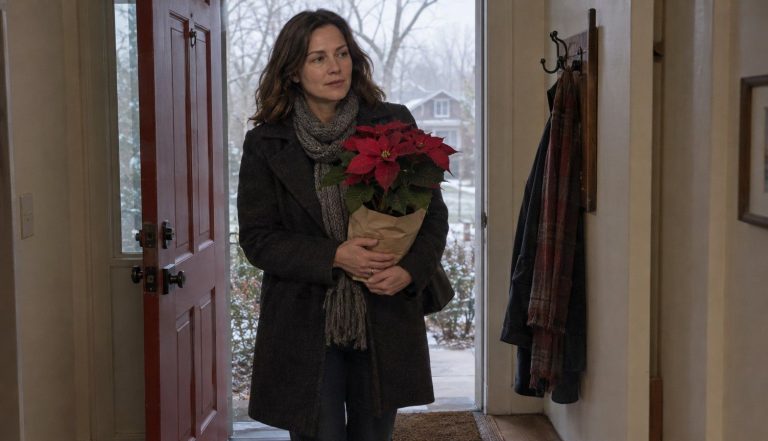
Unwrap it as soon as you are home, then set it in a bright spot away from cold glass, doors and heating vents.
Illinois Extension, the University of Illinois’ advice service for home gardeners, says a few cold minutes can damage the bracts (the colored leaves most people take for flowers).
Cold air, drafts and soggy roots are three of the main risks.
The trip home and the first hour
Cold is the risk on the way. Illinois Extension says to have the plant sleeved or covered when outdoor temperatures are below 50°F.
At home, take the sleeve off carefully and put the plant in indirect light. Six hours of light a day is the ideal, and the plant should not touch a cold window.
Keep it away from heating vents and doors. Illinois Extension says the plant stays freshest in a cool room, away from drafts.
Where it should sit
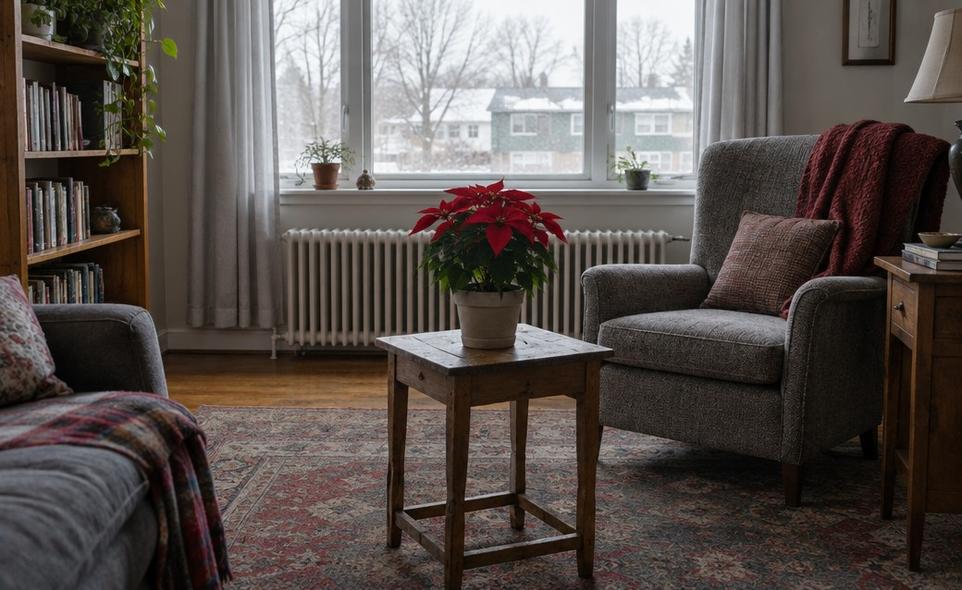
Illinois Extension gives a clear range: no lower than 55°F and no higher than 70°F. The ideal is 65°F.
Daytime can run 60 to 70°F, with nights around 55°F. High temperatures shorten the plant’s life, so a cooler room at night helps if you have one.
Bright light is good, but direct sun or hot lights can dry the plant out.
That warning comes from the University of Florida’s IFAS Extension, the state’s public gardening advice service. It also says slightly humid air helps the color last, and suggests misting or a gravel tray.
If the plant has you looking for more to grow in the dark months, there are other ways to keep gardening going indoors through winter.
Watering without drowning it
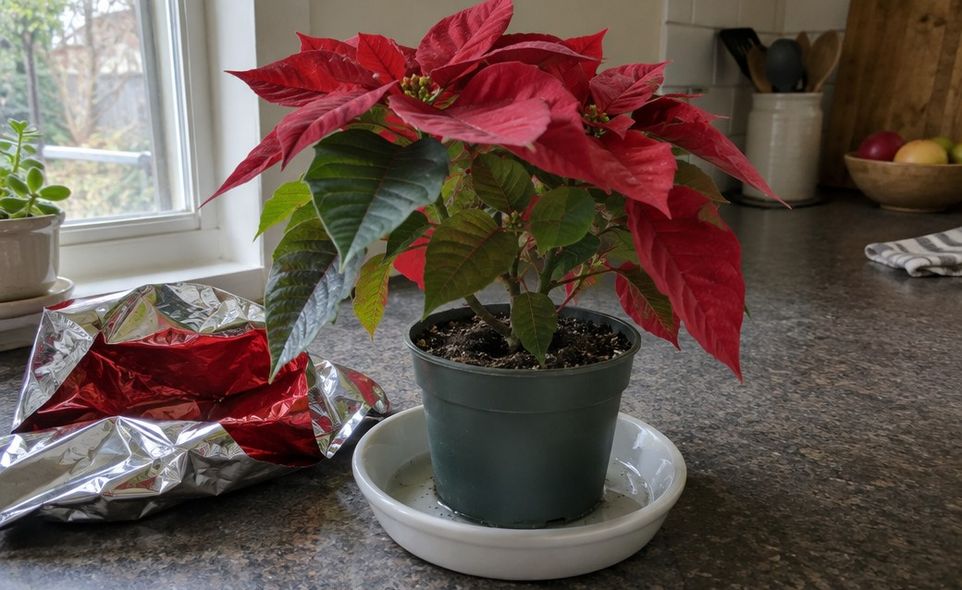
If yours came in decorative foil, water can’t escape, and the roots sit in a puddle.
Illinois Extension says to punch holes in the foil so water can drain into a saucer. Then water when the soil is dry, let the water drain, and throw away what collects in the saucer.
IFAS says to keep the soil from getting soggy, because too much water can kill a poinsettia.
Check the soil with a fingertip each day.
Water only when the surface feels dry, and never leave water standing in the saucer.
What shortens its life
What the sources warn against:
- Cold exposure. A short chill, even on the way home, can damage the bracts and leaves.
- Drafts and vents. Both say to keep it away from drafts; Illinois Extension adds heating vents and doors.
- Heat. Warm rooms shorten the plant’s life.
- Wilting. Illinois Extension says wilted plants tend to drop bracts sooner, so letting the soil go bone dry is a risk too.
- Soggy soil. Too much water can kill the plant, per IFAS.
Illinois Extension says it depends on the plant’s maturity, when you buy it and how you treat it.
Illinois Extension says good care gives 6 to 8 weeks, though some varieties stay attractive for months. IFAS says the color can last until March if the plant never meets freezing temperatures.
Expect weeks of color from a healthy plant, and possibly months.
Your first week, step by step
- Hour one: unwrap it and set it in bright, indirect light, off cold glass and away from vents and doors.
- Day one: punch holes in the foil, or take the foil off, and put a saucer underneath.
- Every day: touch the soil. Water if it is dry, then empty the saucer.
- Every night: move it to a cooler room if you can, around 55°F.
- All week: watch for wilting, soggy soil and any draft you missed.
On feeding, the sources disagree.
Illinois Extension says to use houseplant fertilizer monthly if you keep the plant past the holidays, but not while it blooms. IFAS says to wait until you move the plant outside.
Is a poinsettia poisonous?
It is not deadly, but it is not harmless either, so keep it out of reach of children and pets.
Poison Control, run by the National Capital Poison Center, calls the deadly reputation wrong. Eaten, the plant can cause mouth irritation and stomach upset. The sap can cause a skin rash.
Researchers could not find a poisonous dose even at about 1.25 pounds of leaves, roughly 500 to 600 of them.
The ASPCA is the American animal welfare charity that runs a pet poison control line. It lists the plant as toxic to dogs, cats and horses.
Its note says the irritant sap bothers the mouth and stomach, sometimes causing vomiting. It adds that the toxicity is generally over-rated.
IFAS adds that some people are sensitive to the sap, which contains latex. If a child or pet eats some, call a poison center or a vet for advice.
Getting it to bloom again next year
It is possible.
It takes some effort, and several months.
Illinois Extension notes that most people throw poinsettias away after they finish blooming.
For a poinsettia, Illinois Extension describes this routine:
- Once about half the leaves and bracts have dropped, water less until the soil is completely dry. Store the plant somewhere cool and dark, watering only enough to keep the stems from shriveling.
- When new growth starts, usually in early May, cut the plant to within 4 to 6 inches of the soil. Then give it a sunny window and treat it like any houseplant.
- Once frost has passed and nights stay above 50°F, move it outdoors gradually. Give it 6 to 8 hours of direct sun and some afternoon shade. Pinch the shoot tips every three or four weeks until mid-August, and bring it in when nights reach 55 to 60°F.
- From about the end of September, give it complete darkness from 5 pm to 8 am, in a closet or under a box. Put it back in the sun by day.
- Keep it between 60 and 70°F. Nights above 70 to 75°F may delay or prevent flowering.
Keep that up until the bracts have good color, usually in early or mid-December. IFAS adds that artificial light at night in fall can delay or stop flowering.
The same long fall nights set the buds on a Christmas cactus.
The darkness has to come every night, from about the end of September until the bracts color.
So the choice is yours: follow the routine from spring on, or enjoy it for its weeks and let it go.