
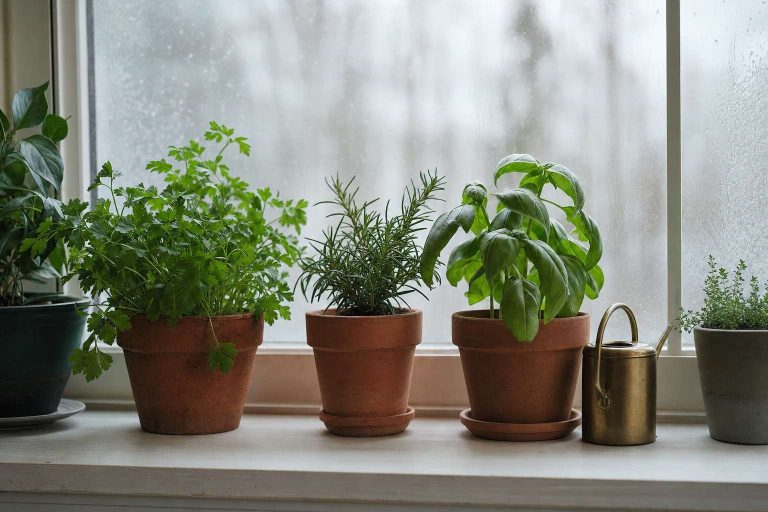
The garden does not close for winter. It shrinks down to a windowsill and slows further, but the calm you get from it is still there if you keep tending something.
Small and slow still counts as gardening, even indoors.
Research has actually measured the calming effect gardening has on stress, and none of it depends on having a full bed in bloom. A few pots on a sill work the same way a full garden does.
Just smaller and slower.
A few houseplants keep the ritual alive
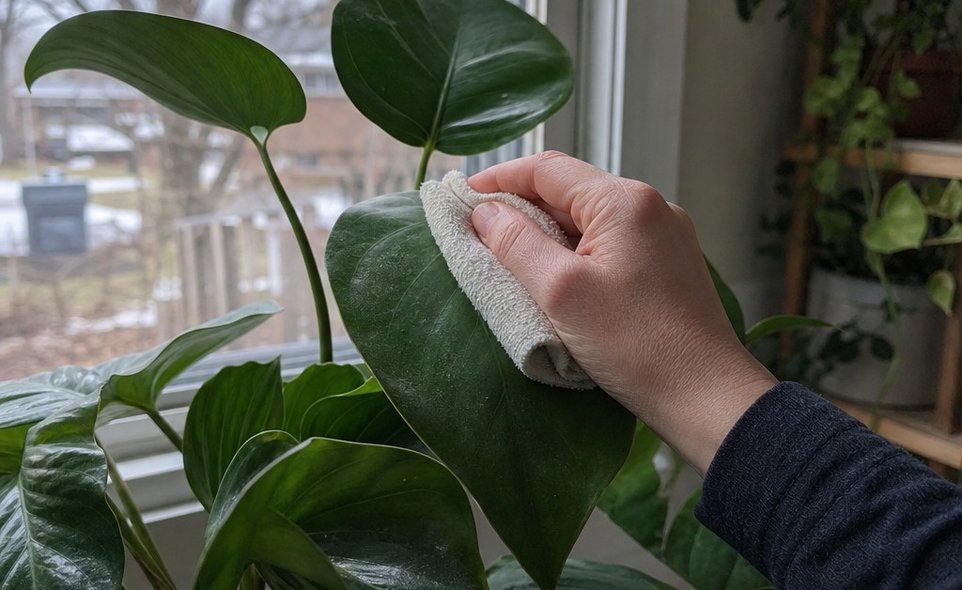
Bring the routine indoors before the beds outside go quiet. A handful of houseplants gives your hands something small to do every day, even in December.
Watering, turning a pot toward the light, wiping dust off a leaf. These are the same small, repeatable tasks that made gardening calming outdoors.
If you do not already have any, a few forgiving houseplants are the easiest way to start. Pick something that shrugs off a missed watering, like a pothos or a snake plant.
A windowsill of herbs
A pot of herbs gives you the same daily tasks in less space. Basil, chives, and thyme will all grow indoors if the light is decent.
Set the pot near your brightest window, south-facing if you have one. Turn it every few days so it does not lean toward the glass.
For a quicker harvest, sow a tray of microgreens: Illinois Extension says they are ready to cut about 10 to 14 days after sowing.
A windowsill herb pot gives you something to check every morning, and something to snip for dinner besides.
Let the seed catalogs slow you down
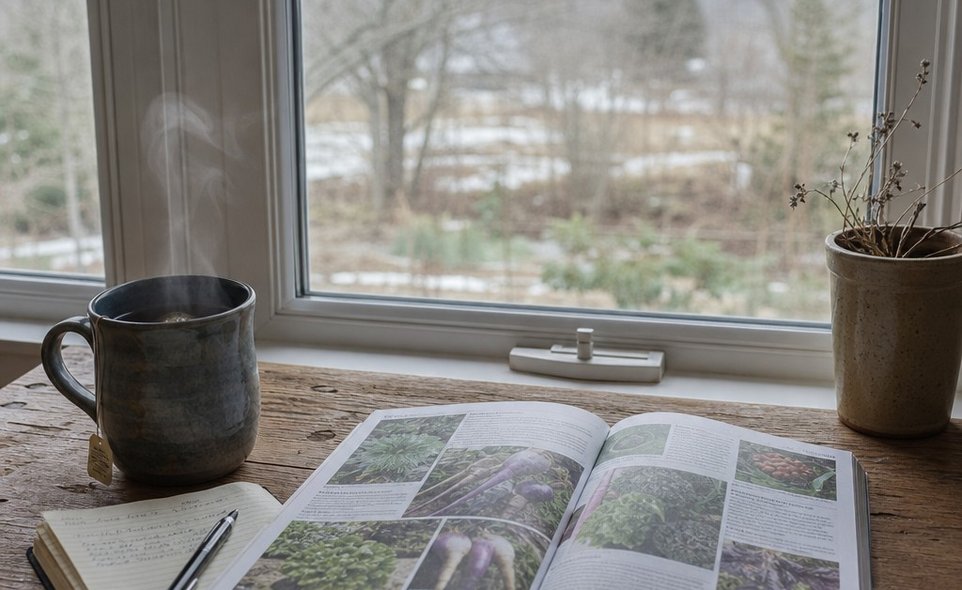
Winter’s slow pace is part of what makes gardening calming, not a problem to fix, and mindful, unhurried gardening works as well on paper as it does with your hands in soil.
Reading a seed catalog cover to cover, circling a few favorites, sketching where things might go next spring. None of it needs to be productive to count.
In January there is nothing to produce yet anyway.
A short list to keep it from turning into one more chore:
- Circle three or four plants you are genuinely curious about, not forty
- Keep a small notebook of what worked and what did not, for next year
- Sketch next year’s pots or beds loosely; nothing has to be final
Force a few bulbs into bloom
Forcing bulbs indoors turns waiting into something you can actually watch happen. Paperwhite, amaryllis, and hyacinth bulbs will all bloom inside without ever touching the ground.
Pot them with good drainage, water lightly, and set them somewhere cool and dim for a few weeks before moving them into the light.
Then wait.
Watching a bulb wake up on its own timetable is a small, private kind of hope, and it takes almost no effort.
Check on what is sleeping outside
The outdoor garden is not gone. It is resting, and a dormant bed still wants a little attention now and then.
A dormant bed still rewards a five-minute check, even when nothing is visibly growing.
Brush snow off a tender shrub, check that mulch has not blown away, glance at a few buds for the first sign of movement. If you planted garlic cloves in autumn, leave them be: they spend the winter growing roots.
Nothing here needs fixing yet.
A short walk outside, even in a coat, counts as tending the bed.
Get the daylight you can find
Winter genuinely feels harder for a lot of people, and that is worth saying plainly. Shorter days can leave you low and tired.
“A few minutes outside with your hands busy beats one more hour on a screen.”
That still holds in January, even bundled up and only checking a few dormant pots.
A short walk outside, or ten minutes near a bright window with your plants, can help you feel a little steadier through a dark stretch. That is not the same as fixing it.
If winter genuinely weighs on you, that is worth taking to a doctor. A windowsill of herbs is a comfort alongside real care, never instead of it.
Water the pots, check the bulbs, glance out at the beds when you pass a window. None of it has to be more than that until spring comes back around.