
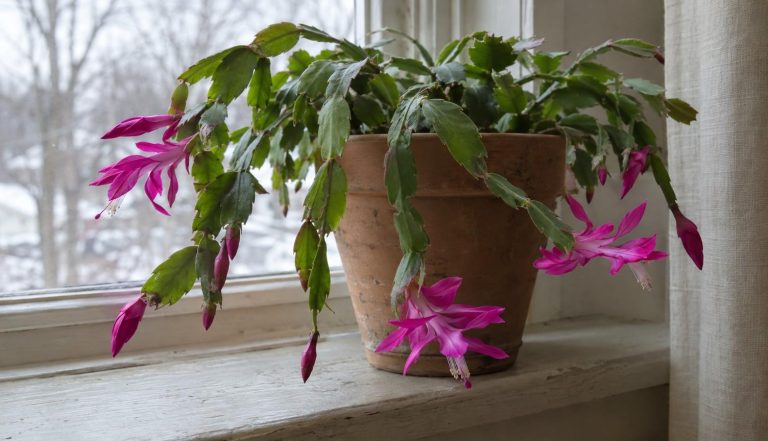
To flower, a Christmas cactus needs long, cool, dark nights in fall.
Light and water keep the plant growing; long nights and cool air set the buds.
A gift plant often arrives covered in flowers, so the first year feels easy. The second year, a healthy green plant with no buds is a puzzle.
Is it a Christmas cactus or a Thanksgiving cactus?
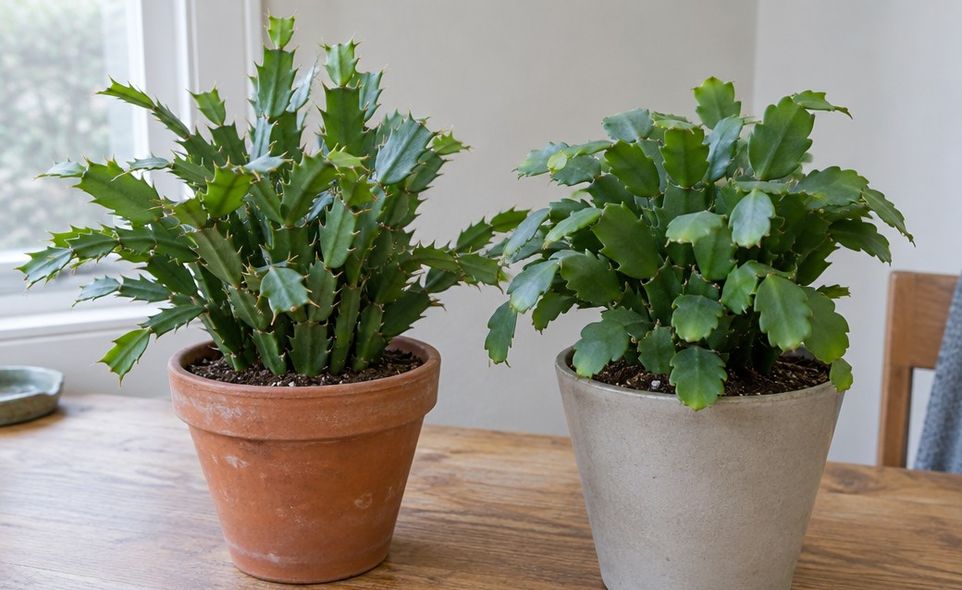
The two look alike and are often sold under one name.
The University of Georgia’s Cooperative Extension office in Paulding County is the local office of the university’s public gardening advice service. It says Thanksgiving cacti are often sold as Christmas cacti.
The easiest check is the edge of the flat stem segments.
- Thanksgiving cactus: jagged, saw-toothed edges. It flowers near Thanksgiving, about a month before the Christmas type.
- Christmas cactus: smooth, rounded edges. It flowers about a month later.
Both need the same care; the practical difference is when they flower.
A plant with rounded edges that blooms early is probably getting cool, long nights sooner than you think.
Light and water the rest of the year
IFAS Extension, the University of Florida’s service that answers home gardeners’ questions, asks for bright, indirect light. It suggests a spot within six feet of a south-, east- or west-facing window.
Water is where the sources differ a little. IFAS says to water when the upper inch of soil feels dry.
The New York Botanical Garden’s plant information service, which answers gardeners’ questions, says to wait until the top half of the soil feels completely dry.
NYBG adds the other half of the rule, and UGA agrees about the saucer. Let the top of the soil dry first, then water well and empty the saucer. NYBG says to do that after 15 minutes.
The stems and roots can rot if the soil stays wet, IFAS warns, so the pot needs a drainage hole and a loose, well-drained mix.
IFAS also says this plant prefers to be a bit root-bound. A pot only slightly larger than the roots is enough.
If you want more plants like this one, there are other forgiving houseplants for a calm home.
The fall nights that set buds
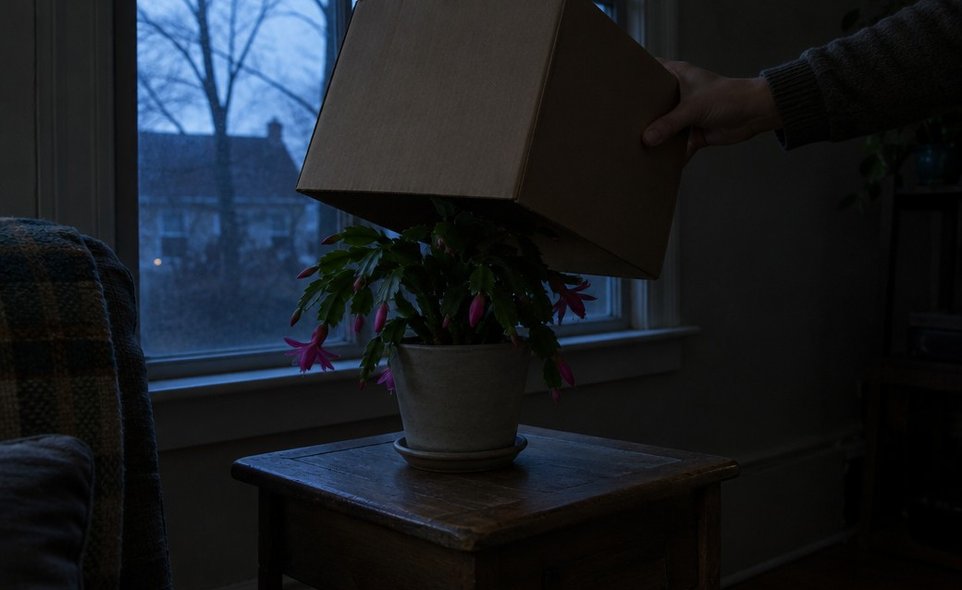
In fall the plant sets buds with long, dark nights, cool nights, or both, and lamp light at night works against it.
The exact numbers differ, so here they are by source.
- UF/IFAS: at least twelve hours of darkness, and no artificial light at night from October through December.
- NYBG: night temperatures of 45 to 55 degrees F. Or, at 55 to 70 degrees F, 13 hours of uninterrupted darkness. Its example is a black cloth over the plant from 6 pm to 7 am.
- UGA Extension: fourteen hours or more of continuous darkness, starting about the middle of September and lasting at least six weeks. It also says night temperatures of 50 to 59 degrees F set buds whatever the day length, though buds may drop at 50 degrees F.
Treat these as ranges, not one correct number. What matters is a cool, dark stretch of several weeks.
UGA adds a warning. As little as two hours of interrupted light can stop buds from forming.
So a room you use in the evening is a poor spot in September and October. A spare room with a window and no evening lamps works better.
UGA also says the plant can stay outdoors in fall, then come inside just before freezing is a threat. It should not stay out if nights fall below 50 degrees F.
Why buds drop
IFAS says Christmas cactus can be prone to bud drop and advises against extreme changes. Keep it away from drafts and heat sources such as vents, fireplaces and televisions.
NYBG names another cause. Moving the plant while buds are forming can make them drop.
Once buds show, pick a spot and leave the plant there.
Two more causes come from UGA. After buds set, the soil needs to stay evenly moist. And temperatures above 90 degrees F can make buds fall.
Poinsettias also start flowering as days grow shorter, IFAS notes; poinsettia care after the holidays follows the same long-night idea.
After the flowers fade: a calendar
Here is a simple plan from one fall to the next, built from the three sources.
- Mid-September: start the long nights (UGA).
- October to December: keep lamps off near the plant at night (IFAS). Buds should be visible in three to four weeks (UGA).
- While buds form and open: keep the soil evenly moist and do not move the pot.
- After flowering: remove spent flowers and stem tips to get more branching (NYBG).
- Late winter to summer: feed during the growing season. IFAS says every one to two months from April to September. UGA says monthly from late winter, stopping in late summer.
- Spring: repot only about every three years (UGA).
- Early June: pinch back stems to encourage branching (UGA). IFAS says not to prune beyond mid-summer.
The plant does not need repotting or feeding in fall. The only fall trim UGA mentions is removing very short stem tips at the end of September.
Cuttings with two or three jointed sections root easily. Per IFAS, set them in sterile, well-drained mix and keep them moist in bright, indirect light until new growth appears.
Next year, write the middle of September on your calendar and start the long nights that day, keeping lamps away from the plant after dark.