
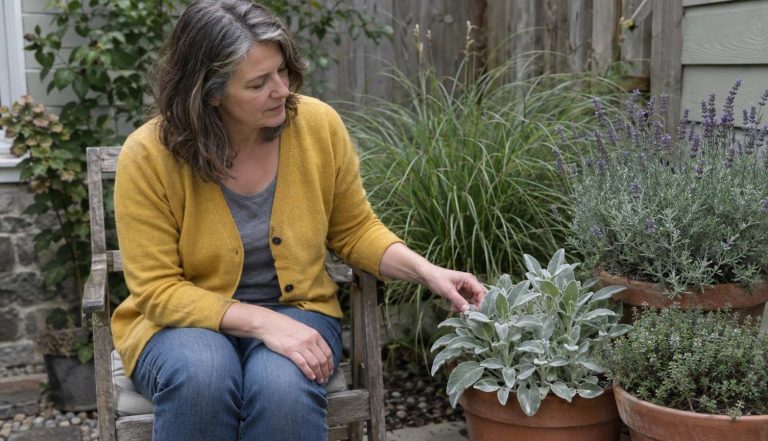
A sensory garden can be as small as a single container. It is a planting arranged for the five senses: sight, smell, sound, taste and touch.
Some are built around one sense. Others bring several together.
You do not need a plot to start one. A pot, a few plants chosen to be touched, sniffed, heard or tasted, and a place to sit are enough.
What a sensory garden is
According to UF/IFAS Extension at the University of Florida, plants and other design elements provide experiences for seeing, smelling, hearing, touching and tasting. Spaces of any size work, including containers.
Horticulture educators at University of Illinois Extension wrote a handout on these gardens. It says they invite you to view plants at close range, to reach out and touch and to inhale a fragrance.
A garden “room” can be designed for one sense at a time or for several at once.
One sense is enough to count. A corner with only touch plants and scent plants is still a sensory garden.
How care settings use sensory planting
The American Horticultural Therapy Association (AHTA), a US membership body that registers horticultural therapists, writes about therapeutic gardens. These are plant-dominated spaces designed on purpose for people to interact with nature, in healthcare, rehabilitative and other therapeutic settings.
AHTA lists three basic features such a garden can include:
- Wide, gently graded accessible entrances and paths.
- Raised planting beds and containers.
- Sensory-oriented plant selection focused on color, texture and fragrance.
Illinois Extension adds that sensory gardens are used for teaching, relaxing and multiple therapies. Some are designed for children, for people who are blind or have low vision, or for therapeutic horticulture.
A corner at home is a smaller thing than any of that. It is a pleasant place to spend time, not a treatment.
One or two plants for each sense

The plants below come from the Illinois Extension pages. Pick what suits your climate, because Illinois advises choosing plants that are hardy to your area.
| Sense | Plant | What it offers |
|---|---|---|
| Sight | Bleeding hearts | Heart-shaped flowers |
| Sight | Zinnias | Showy flowers and butterflies |
| Smell | Lavender | Illinois Extension calls its smell very pleasing and calming |
| Smell | Creeping thyme | Scent |
| Sound | Ornamental grasses | Noise when the wind blows through them |
| Sound | False indigo | Rattling seed pods |
| Taste | Chives | Mild onion-like flavor |
| Taste | Nasturtium | Peppery flavor, and the flowers are edible |
| Touch | Lamb’s ear | Soft, furry foliage |
| Touch | Satiny wormwood | Fine, silky foliage |
Three details from the same pages help you place them.
- Scent arrives two ways. Some plants release it on their own, like roses. Others, like geranium, only when rubbed or crushed.
- Touch plants need to be sturdy. Illinois suggests plants that withstand frequent handling.
- Edibles stay labeled. Illinois says to identify clearly which plants are edible and not to combine edibles with toxic plants.
Illinois also says to leave out poisonous or allergenic plants and to avoid plants that need pesticides.
Add a seat
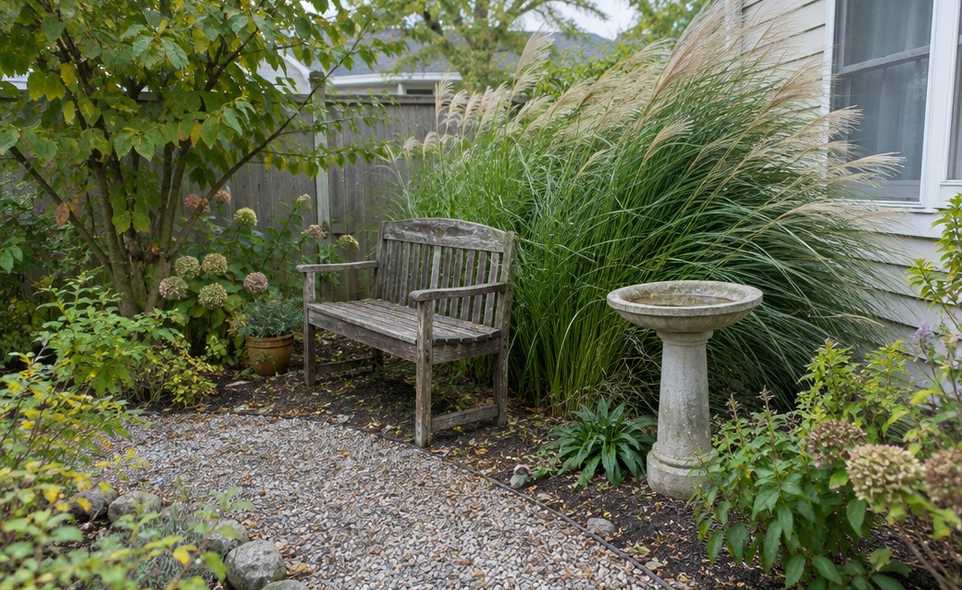
UF/IFAS names the sounds: wind rushing through leaves, bamboo stems knocking together and grasses rustling. Leaves left on the ground crunch underfoot.
Sound can come from outside the plants too. UF/IFAS lists wind chimes, fountains and waterfalls. Birdsong can fill a garden, especially one with fruiting plants and birdbaths.
UF/IFAS suggests a seating area where you can pause and listen.
Start with a pot or a corner
Illinois Extension describes brushing against plants that spill over the edge of a raised bed as a touch experience.
A fragrant plant such as lavender can add scent to that touch.
If you want to build around smell, a few fragrant, forgiving plants like lavender, mint and jasmine are a place to begin. Plants that smell good, feel good and ask very little suit a first corner just as well.
Raised beds and wider paths make a sensory garden usable by more people, according to both Illinois Extension and UF/IFAS. If you have room, that is worth planning in from the start.
Begin with lamb’s ear in a pot set beside the spot where you sit, and add the other senses one plant at a time.