
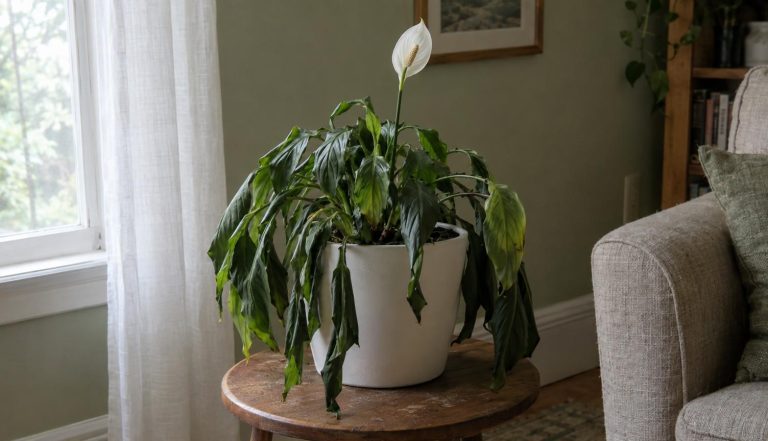
A drooping peace lily is often telling you it needs water.
Peace lilies are easy to grow, so a wilted one is no reason to panic.
Light, brown tips, flowers and pot size matter too, and each has a plain answer.
Water it at the droop, but not only then
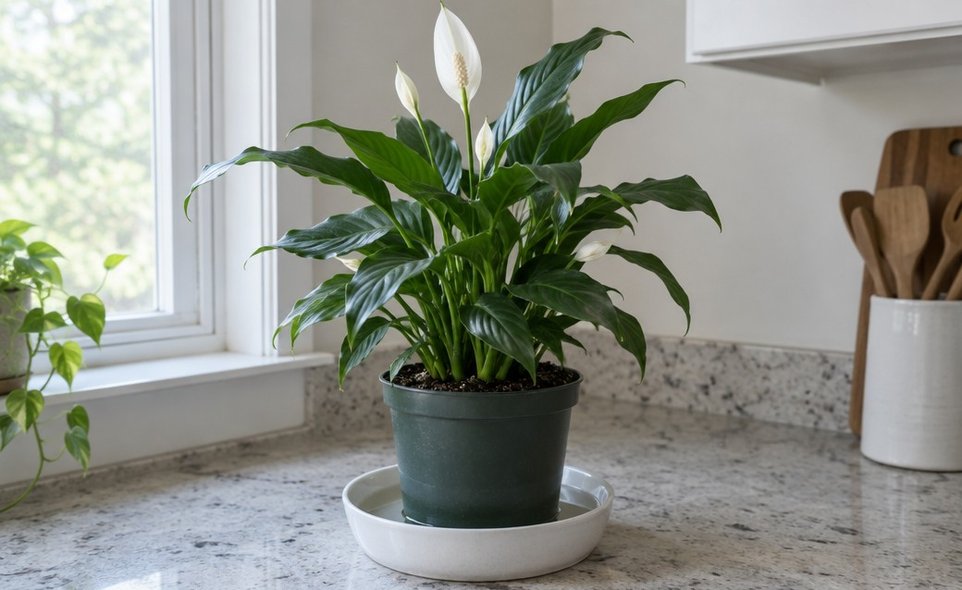
Clemson University’s Home & Garden Information Center is the South Carolina university’s home and garden information service. Its peace lily factsheet gives the target: keep the soil moist but not soggy, and let it dry out slightly between waterings.
A University of Illinois extension specialist in home horticulture, answering a gardener’s question, says peace lilies are often good indicators of when they need water. They wilt down.
The wilt comes after the soil has dried out excessively, and that same drying turns leaves and edges yellow.
Waiting for the droop every time means letting the soil get that dry every time. On the wet side, Clemson says root and stem diseases are the most common problem, usually tied to overwatering.
Three habits keep the water side simple:
- Use room temperature water. Clemson recommends it.
- Never leave the pot standing in a saucer of excess water. Clemson says this leads to root rot.
- Try watering from below. NC State says it works very well for peace lilies.
The peace lily is also one of the houseplants that suit a stress-relief routine.
Reading the other signs
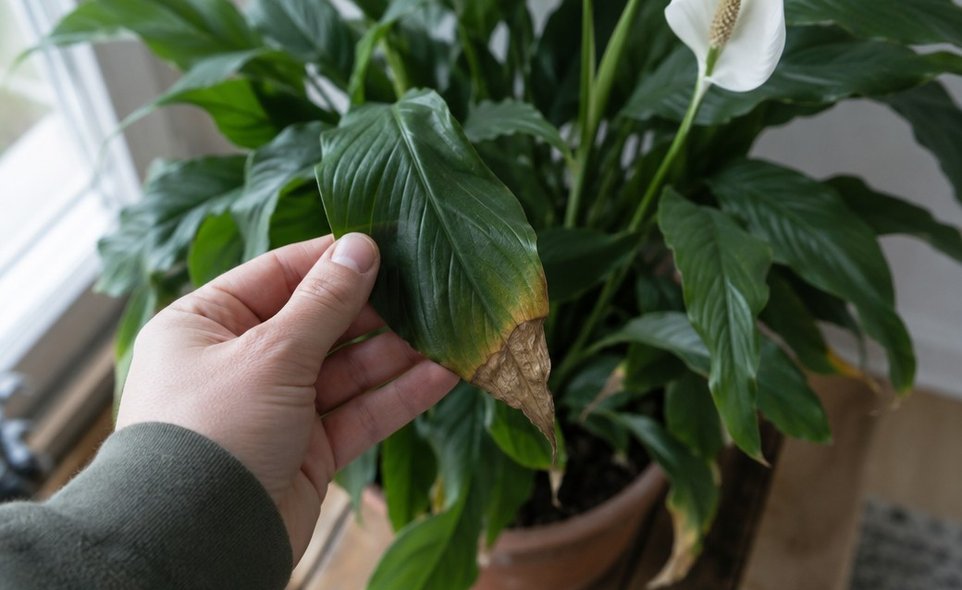
NC State Extension’s plant toolbox, its plant database for gardeners, names three causes of brown leaf tips: excessive direct sunlight, underwatering and low humidity. Clemson adds overfertilizing, and the Illinois specialist adds fluoride.
| Symptom | Likely cause | What to do |
|---|---|---|
| Wilting, with yellow leaves and edges | Soil dried out excessively (Clemson) | Water; keep the soil moist but not soggy |
| Brown tips, sunny spot | Excessive direct sun (NC State) | Move it out of direct sun |
| Brown tips, municipal tap water | Fluoride in the water, which peace lilies are very sensitive to (Illinois) | Switch to rainwater or another non-municipal source |
| Brown tips, heavy feeding | Over-fertilizing (NC State, Clemson); NC State adds salt build-up | Fertilize at one-quarter strength; NC State also flushes the soil between applications |
| Scorched leaves | Heat from direct sun (Clemson) | Move it out of direct sun |
| Flowers turning green | Age, not a fault (Clemson, NC State) | Nothing |
Brown tips have several possible causes, so match the cause to your situation before changing anything.
For feeding, Clemson suggests a balanced liquid houseplant fertilizer such as 20-20-20 every six to eight weeks in spring and summer, at one-quarter of the recommended strength.
Getting it to flower
Clemson calls the peace lily one of the few foliage plants that will flower in low light. It also says a lack of flowers usually means one of two things.
- The plant is less than a year old.
- It is growing in insufficient light.
A white flower fading to green is a normal sign of age. NC State says the blooms change to pale green after 10 days, then stay lovely for at least another month.
Repotting without overdoing it
Clemson says peace lilies like to be slightly pot-bound. It is time to repot when roots grow through the drainage holes or circle on top of the soil.
Go up only one to two inches in pot size. A pot that is too large may keep the mix too wet, which leads to root rot.
Clemson says repotting can happen any time of year, though the plant recovers quicker in the growing season. NC State says to repot, when necessary, in February or March.
Loosen the roots gently before the plant goes into its new pot, so they can grow out through the mix.
Pets, and one common question
The ASPCA, the animal welfare society that runs an animal poison control line, lists the peace lily as toxic to dogs and cats. The signs include oral irritation, drooling, vomiting and difficulty swallowing.
People also ask whether houseplants purify the air in a home, which is a separate question from keeping one healthy.
Light and temperature
Clemson says peace lilies tolerate low light but grow best in bright indirect light. NC State says they prefer partial to deep shade. Both say to keep them out of direct sun.
Warm days of 68 to 85 °F suit them, with nights about 10 °F cooler. Clemson says to avoid temperatures below 60 °F, and to keep the plant away from vents that blow hot, cold or drafty air on it.
Stand it in bright indirect light, away from direct sun and away from vents.