
No, not in a way that cleans the air in your home.
The tests behind the idea ran in small, sealed chambers. A real room is different: air from outside keeps replacing the air inside, and that dilutes pollutants much faster than a plant can remove them.
That does not make plants a bad idea. It makes them a poor air filter.
What the 1989 NASA study looked at
NASA published its report on indoor plants on September 15, 1989. Its authors were Wolverton, Johnson and Bounds.
The title was Interior Landscape Plants for Indoor Air Pollution Abatement.
The report evaluated the leaves, roots, soil and microorganisms of plants as a possible way to reduce indoor air pollutants. It also describes a design that pairs plants with an activated carbon filter:
- Large volumes of air move through the carbon bed.
- Plant roots and their microorganisms then break the pollutants down.
The chemicals the later chamber studies tracked are volatile organic compounds (VOCs), chemicals given off as gases by certain solids and liquids.
Drexel University, a university in Philadelphia, describes how the 1989 experiment and others like it were run. According to its news release, they were conducted in a sealed chamber in a lab.
The review’s authors describe the typical setup. A potted plant sat in a chamber, often a cubic meter or smaller.
One chemical was injected, and its decline was tracked for many hours or days.
The result was real, but it came from a sealed box, not a living room.
What a real room changes
In 2019, Bryan Cummings and Michael Waring of Drexel’s engineering department reviewed 12 published chamber studies. Their paper, Potted plants do not improve indoor air quality, appeared in the Journal of Exposure Science and Environmental Epidemiology.
They turned 196 results into one common measure, the clean air delivery rate (CADR). CADR is a measure used for air cleaners, and here it is counted in cubic meters of air per hour.
Single plants varied by orders of magnitude. The median was 0.023 cubic meters per hour.
Outdoor air already replaces indoor air about once an hour in typical buildings, the abstract says. To match that with potted plants, the review calculates 10 to 1000 plants per square meter of floor space.
Drexel’s news release gives a different range: between 100 and 1000 plants per square meter. The paper’s abstract says 10 to 1000. Both are far more plants than any room holds.
What the EPA says
The US Environmental Protection Agency (EPA), a federal government agency, has addressed the question directly. It notes that publicity has suggested houseplants reduce levels of some chemicals in laboratory experiments.
Its position: there is currently no evidence that a reasonable number of houseplants remove significant quantities of pollutants in homes and offices.
The EPA does treat indoor VOCs as worth attention. Levels of several organic chemicals average 2 to 5 times higher indoors than outdoors, it says.
It also says not much is known about the health effects of the levels usually found in homes.
The claim and the evidence side by side
| Claim | What the evidence says | Source |
|---|---|---|
| Plants remove VOCs | True in small sealed chambers over many hours or days | 2019 review abstract |
| So plants clean a home’s air | Median single-plant rate of 0.023 cubic meters per hour, against about one air change per hour from outdoors | 2019 review abstract |
| A few plants are enough | 10 to 1000 plants per square meter needed to match outdoor air exchange (abstract); 100 to 1000 (news release) | Abstract and Drexel release |
| Plants clean air in homes and offices | No evidence that a reasonable number of houseplants remove significant quantities of pollutants | EPA |
The chamber result stands. The step from chamber to living room is the part the evidence does not support.
Why plants are still worth keeping
Drexel’s release says plants can make a home or office space look nicer.
Cummings and Waring end their abstract with advice for future studies. One of the research directions they suggest instead is plants’ possible productivity and well-being benefits.
Gardening has been studied for its effect on stress levels. Any calming effect from tending a few houseplants would not come from cleaner air.
Keep the soil from staying soggy. The EPA says overly damp soil may promote the growth of microorganisms that can affect allergic individuals.
This is general information, not medical advice. If you have allergies or breathing problems, ask a doctor.
What helps instead
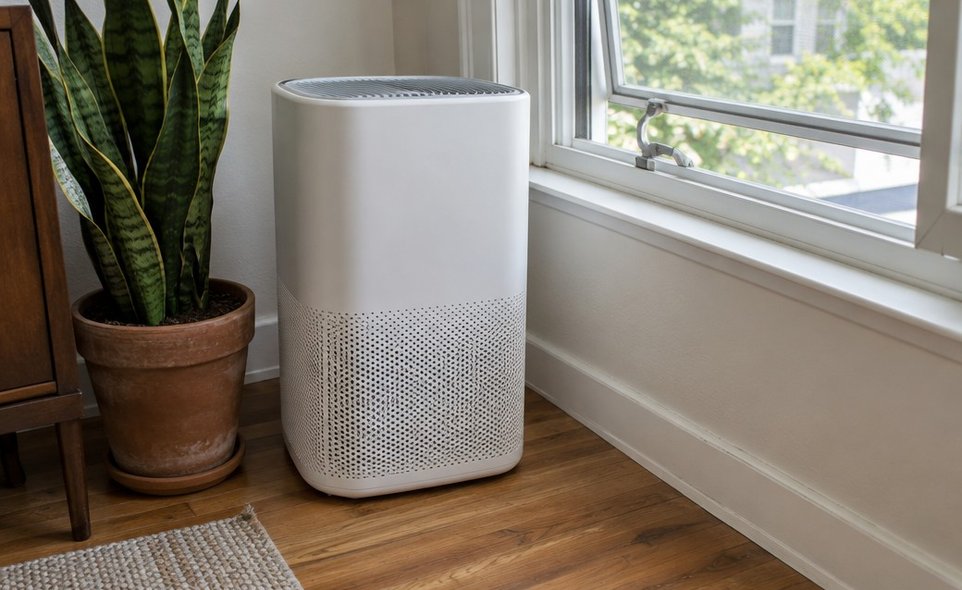
The EPA names three basic strategies for improving indoor air quality: source control, improved ventilation, and air cleaners or filtration.
- Source control is usually the most effective. Remove a pollution source or reduce its emissions.
- Ventilation brings outdoor air in. The EPA lists opening windows and doors, running window or attic fans when the weather permits, and using bathroom or kitchen fans that exhaust outdoors.
- Filtration is a supplement, not a replacement. The EPA says air cleaners are generally not designed to remove gaseous pollutants.
- For gases, it advises an air cleaner with an activated carbon filter, which can work when the filter holds a large amount of material.
No air cleaner or filter eliminates all the pollutants in a home, the EPA adds.
VOCs come from paints, paint strippers, aerosol sprays, cleansers, air fresheners and hobby supplies, among other products. During and for several hours after paint stripping, levels may be 1000 times background outdoor levels.
The EPA says ventilation is particularly important during short activities that generate high levels of pollutants. Examples are painting, paint stripping, cooking, sanding and soldering.
So the next time you paint or strip furniture, open the windows and doors while you work. Or run a window fan, or an exhaust fan that vents outdoors.
The EPA adds two conditions: do it when the weather permits, and think twice if smoke or another outdoor pollution source is nearby.