
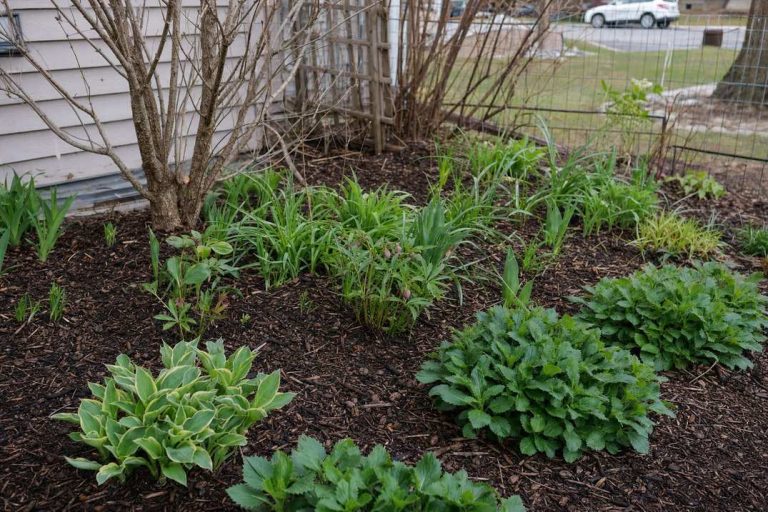
A garden that nags you is not low-maintenance.
If you spend more time feeling guilty about weeding than you do actually enjoying the space, something has gone wrong in the setup. Not in your effort. In the setup.
The easiest gardens are rarely the tidiest ones. They ask very little of you.
A few practical changes and the whole relationship shifts. Less to water, less to weed, less to replant every spring. What is left is the part you actually wanted.
Start with plants that come back on their own
Every annual you plant has to be replaced next year. That is fine if you enjoy the ritual. If you do not, it becomes a deadline.
Perennials are the other option. Plant them once and they return each season without any help from you.
Echinacea, black-eyed Susans, hostas, lavender, catmint. They spread slowly over time, fill in gaps on their own, and most will shrug off a missed watering without drama.
One bed of mixed perennials is worth ten seasons of replanting annuals.
Native plants go a step further. They evolved here, so they are already adapted to the local rainfall and soil. Once they are settled, they mostly look after themselves.
If you want a starting point for low-maintenance perennials, compare hardy perennial plant sets on Amazon and pick two or three that suit your light.
A note on the links: a few of them are Amazon affiliate links. Anything bought through one sends a small commission this way, and costs you nothing extra.
Cover the soil so weeds cannot take hold
Bare soil is an open invitation.
A 3 to 4 inch layer of mulch blocks the light that weed seeds need. Without light, most of them never germinate, and the few that do push through are easy to pull from loose, damp soil underneath.
Mulch also holds moisture in. That means less watering, particularly during dry stretches.
Bark chips, wood mulch, or even a thick layer of compost all work. Replenish it once a year, usually in spring. That single annual task saves far more time than it costs.
Group plants by how much water they need
One of the quieter sources of garden frustration is having one patch that needs watering every few days next to another that barely needs anything.
When you group plants by water need, you can water with intention instead of doubt.
Put drought-tolerant plants together. Let them dry out between waterings. Put anything that wants more moisture somewhere you can reach it easily, or connect it to a drip line.
Watering becomes a five-minute job instead of a guessing game.
This is also where a simple drip system is worth it. Drip irrigation delivers water directly to the roots, wastes almost none of it, and can run on a timer.
You set it once, adjust through the season, and the watering happens without you.
Use containers where the garden gets complicated
Is a patch of your garden hard to weed, hard to water, or just awkward to reach? A container might be simpler than a bed.
Containers give you complete control over the soil, with no competing weeds from below and no guessing what the ground is like.
Self-watering pots go further still. Fill the reservoir at the base every week or two and the plant draws what it needs without you checking daily.
They are also easy to move. If something is not working in one spot, you change it. No digging, no replanting.
A few well-chosen containers can replace a whole fussy border with something that barely asks for attention. That is exactly the kind of garden worth having.
For how to keep any of this genuinely calm rather than productive, gardening for stress relief works best when you let it stay easy.
Shrink the lawn
Lawn is among the most demanding ground covers you can have.
Mowing, edging, feeding, treating bare patches, dealing with moss. A lawn wants a weekly relationship. If you are not interested in giving it that, reducing it is one of the highest-return changes you can make to an outdoor space.
Replace sections with ground cover: creeping thyme, ajuga, clover, or a patch of gravel. All of them suppress weeds, ask for almost nothing, and do not need cutting.
You do not have to remove the whole lawn at once. One season at a time, replacing the patches that need most maintenance, gets you there without a big project.
Less lawn means fewer Saturdays lost to a mower.
Match the garden to your actual life
A low-maintenance garden is not about having no garden. It is about matching what you have to what you can realistically give.
If ten minutes a week is all you have, build for that. Three containers, some perennials, bark mulch over the beds. Done.
If you have a bit more time and space, the same principles scale. More perennials, a drip system, ground cover where the lawn used to be.
The point is how it makes you feel, not how much it produces.
A garden that asks less of you is a garden you will actually use. That is when the calming part kicks in, the slow pace, something alive to tend, hands busy while your mind settles.
There is good evidence behind that effect, which is worth reading about if you want to understand whether gardening can really reduce stress levels.
One small note: gardening supports how you feel day to day, but it is not a treatment for anxiety or any other health condition. Think of it as a good, gentle habit, not a prescription.