
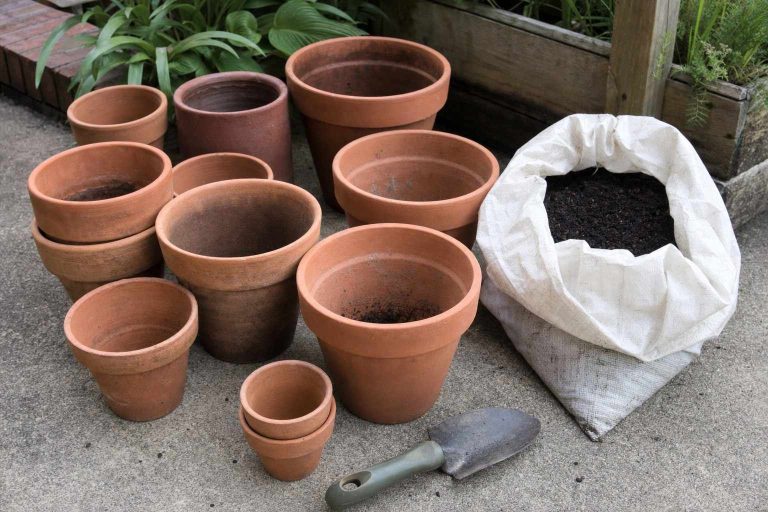
A few pots on a step. That is all this takes to start.
Container gardening is the most forgiving way to begin because the whole thing stays manageable. No digging up a lawn.
No planning a big bed. Just a pot or two in a spot that gets some sun, and something easy growing in it.
No yard required.
If gardening has felt like too much before, containers are the version that isn’t.
Pick a pot that is big enough, with holes at the bottom
Two things matter most: enough room for roots, and somewhere for the water to leave.
This is the one thing beginners get wrong most often: a pot that is too small, or one with no drainage.
Most vegetables and herbs need at least a 10-inch-wide, 10-inch-deep container to have enough room for roots. Tomatoes want more, ideally a 5-gallon pot minimum. Lettuces and herbs can do fine in something smaller.
The drainage holes matter just as much as the size.
Roots sitting in pooled water rot quickly. Whatever pot you pick, whether plastic, terracotta, or a clean bucket, check the bottom before you fill it. If there are no holes, drill some.
You can compare beginner planter pots on Amazon to find a size that fits where you want to put them.
A note on the links: a few of them are Amazon affiliate links. Anything bought through one sends a small commission this way, and costs you nothing extra.
Use potting mix, not garden soil
Garden soil is too dense for containers. It compacts, stops water draining properly, and makes it harder for roots to breathe.
Potting mix is lighter and made for containers. It holds moisture and air at the same time, which is what roots need when they can’t spread outward into the ground.
A bag of all-purpose potting mix is all you need.
Fill the pot to about an inch below the rim, so there’s a little room when you water.
Water when the top inch feels dry
The most common beginner mistake with containers is overwatering.
Containers dry out faster than in-ground beds, especially in summer heat, so it feels natural to water often. But more plants die from too much water than too little.
Push your finger into the soil, just to the first knuckle. If it feels dry at that depth, water thoroughly until it drains from the bottom holes. If it still feels damp, wait another day and check again.
You don’t need a schedule. You need to check.
That’s genuinely all there is to it.
A few things that work well for a first container
Pick something forgiving. Your first container should be hard to kill.
Some plants suit containers better than others. These shrug off a missed watering and don’t need much space:
- Herbs: basil, mint, chives, parsley. Fast to grow, useful in the kitchen, happy in small pots.
- Lettuce and salad greens: shallow roots, quick to harvest, do fine in cool weather.
- Marigolds: nearly unkillable, cheerful, and they deter some pests from nearby pots.
- Cherry tomatoes: need a bigger pot and some sun, but reward you faster than larger varieties.
Start with one or two of these, not five or six. A few pots you actually check on is better than a collection you start to avoid.
This fits the same idea behind keeping the whole thing low-pressure from the start.
The point is that it stays easy
Container gardening works as a starting point because it doesn’t ask much. You can move the pots if a spot isn’t working. You can add one more container in a month if you want to.
If something fails, you’ve lost one pot of soil, not a season’s work on a dug bed.
Start small. An overplanted garden becomes one more source of stress, not relief.
Ten minutes every couple of days to check the soil and water what’s dry. That is all the time it takes to keep a few containers going.
And when it stays that easy, it actually stays enjoyable, which is the whole reason to have a garden at all.
If you want to understand more about why that low-key approach is what makes gardening genuinely calming, the evidence behind it is worth a look.