
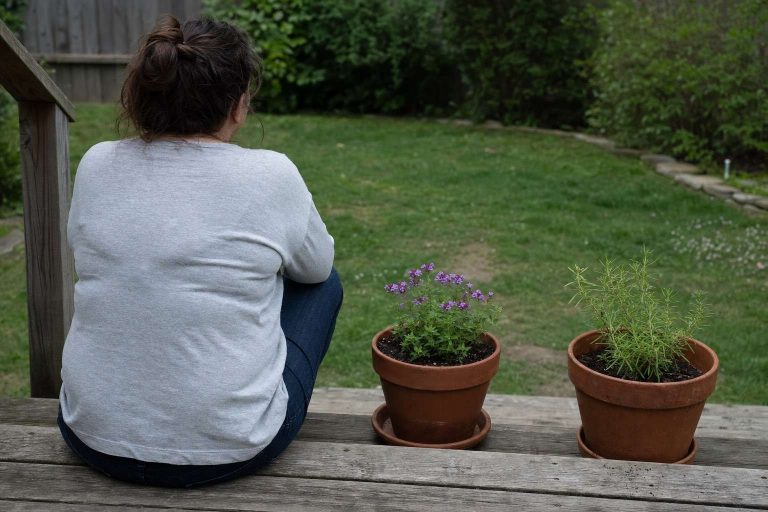
You picked up gardening to slow down.
Then somewhere along the way it became a project. The beds had to be laid out just right. You started comparing your plot to photos online. You felt behind.
That is the moment gardening stops being a break and starts being a chore.
It does not have to go that way.
The calm disappears when the pressure arrives
A garden gives you something to do with your hands, something that moves slowly, something that does not care about your inbox, which is exactly what you need.
But the second it becomes a performance or a competition with yourself, the calm evaporates. You are back in stress mode, just with soil on your hands.
The point of a calm garden is completely lost if you turn it into a to-do list you feel guilty about.
Keep that thought somewhere central. It is the thing that decides whether gardening helps you or just adds to the pile.
Plants will die. That is fine.
New gardeners often expect a kind of perfection that experienced gardeners stopped chasing years ago.
Things go wrong in gardens. A seedling sulks, a pot dries out, something gets nibbled overnight. A row comes out crooked.
If a plant dies, you have learned something cheap. That is all it is.
It is not a verdict on you. Plants are not grading you. This is a low-stakes hobby, and keeping it that way is the whole skill.
Start smaller than feels like enough
Most people start with too much. A full bed, ten varieties of plants, grand plans for next spring.
Then it becomes work, and the relaxing part quietly disappears.
A small, manageable garden stays enjoyable. A big one becomes a duty.
A few pots, one small bed, three plants you actually like. That is a good start. You may want the calmer version of what that looks like in practice.
In that case, doing it the relaxing way and starting small is exactly the right place to begin.
You can always add more once you have settled in. Pulling back from too much is the hard direction.
Lower the stakes deliberately
It helps to remind yourself what you are trying to get out of this.
Not a prize-winning plot. Not a harvest that justifies the effort. Not something to photograph.
The point is how it makes you feel, not how much it produces.
A few herbs that grow without much fuss. A pot of something green on a step. Ten quiet minutes where you are not looking at a screen.
That counts. It counts a lot.
You do not need to be consistent to succeed
You can skip a day. You can skip a week. The garden forgives you.
Skipping a week is not failure. Coming back after a month away is not failure. Gardening does not punish you for being a normal, busy person.
Relaxed contact with a small, forgiving garden is worth more than disciplined effort poured into one that overwhelms you.
- Pick plants that handle a missed watering without drama
- Keep the size small enough to tend in fifteen minutes
- Skip the days you do not feel like it without guilt
That last one matters. Obligatory gardening does not give you the same thing that willing gardening does.
The goal is enjoyment, not improvement
There is a version of gardening that is about getting better: learning technique, expanding the plot, optimizing yields. That is genuinely enjoyable for some people.
That is probably not why you are here.
You want to feel calmer. You want a small break from the noise.
Something that runs on its own clock and does not ask anything from you.
Keep it light. Keep it imperfect. That is what makes it work.
If you are curious whether gardening actually moves the needle on stress in any measurable way, there is decent evidence it does. Gardening has been shown to reduce stress levels, but the catch is that the benefit depends on keeping it enjoyable, not grinding through it.
One note worth saying plainly. Gardening can help you feel calmer, but it is not medical treatment. It is not a substitute for professional care if you are dealing with anxiety or depression.
As a gentle daily habit, though, it is one of the easier ones to pick up.