
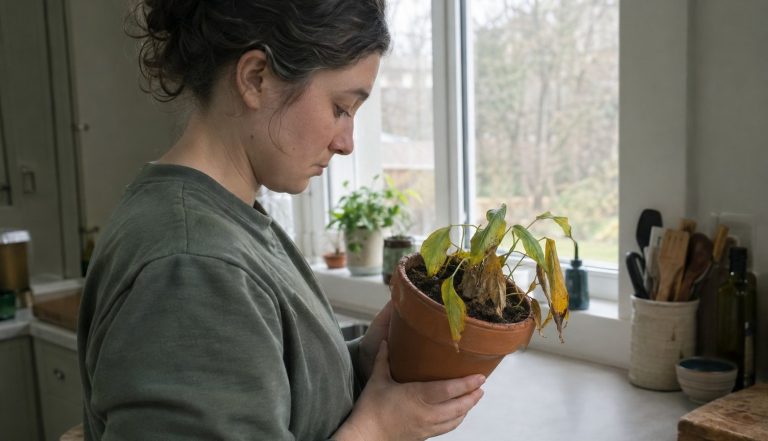
There is no such thing as a black thumb.
What there is, in almost every case, is one of four ordinary things going wrong in a row. The same four, over and over, whichever plant you bought.
Water. Light. The pot.
And, last, whether the plant suited the spot at all.
They are worth checking in that order, because that is roughly the order of how often each one is the answer.
The whole pass takes about ten minutes and needs nothing you would have to buy.
Start with the water, because it is the usual answer
Iowa State Extension puts it plainly. Overwatering is a common reason houseplants fail.
It is also the hardest one to spot, because the plant droops either way. Too much water and too little water both damage roots, and damaged roots both look like thirst.
So the check is the soil, not the leaves. Push a finger an inch or two into the mix before you decide anything.
If the soil is wet and the plant is drooping, more water is the wrong move.
Telling the two apart is its own short job. The black edges and brown tips that separate them are the fastest way in.
Iowa State also lists what too much water actually looks like over time. Yellowing or browning leaves, leaf drop, wilting, crown rot, fungus gnats, and eventually death.
If that list matches, stop here. You have found it.
Then the light, which people almost never measure
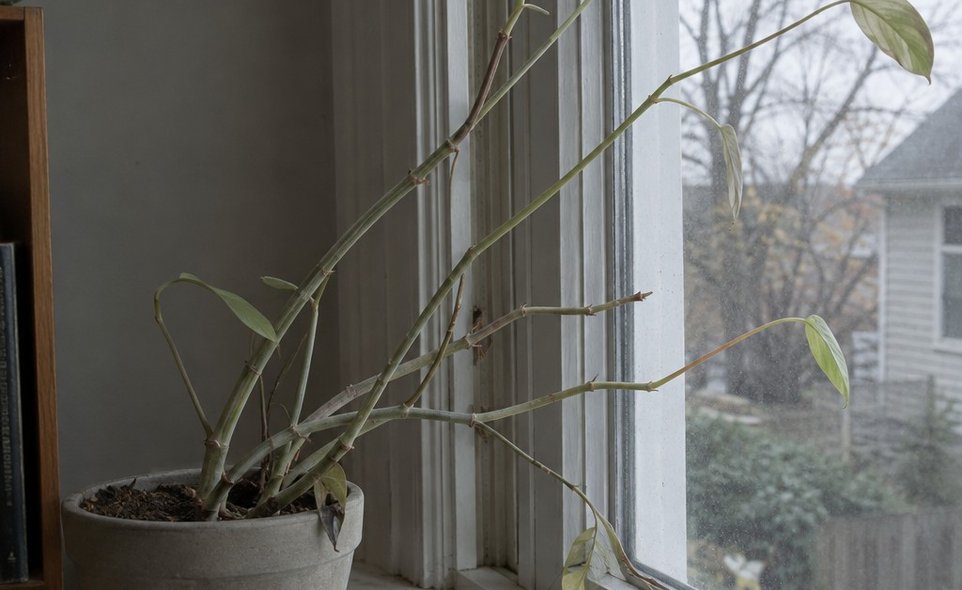
Light is the cause people guess at and rarely check, because a room that feels bright to you can be dim to a plant.
The University of Connecticut gives the tell for too little.
Plants bend toward the light, have pale leaves, spindly stems and few or no flowers.
Too much light reads differently. UConn notes that leaves pale noticeably or turn purplish in strong light.
That plant wants a less brightly lit spot, not a rescue.
Leggy and reaching means move it brighter. Pale or purple means move it back.
The fix is usually a different windowsill, not a different plant. UConn suggests moving it to a brighter spot and pruning out the spindliest stems once new growth appears.
Most people have never counted the hours their spot actually gets. What a plant tag means by full sun is worth ten minutes on its own.
Then the pot, which quietly causes the first problem
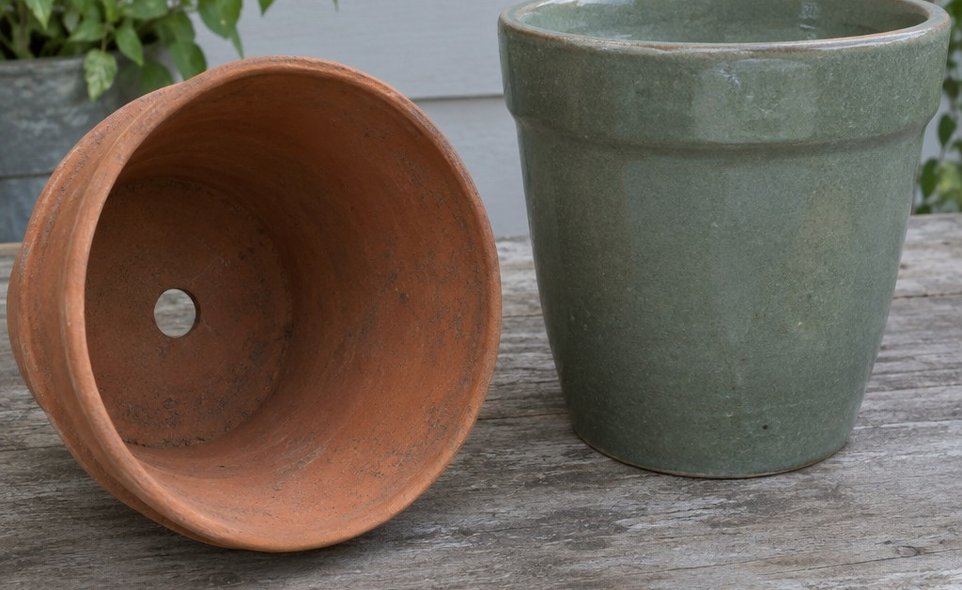
A pot can make a careful waterer look careless.
Iowa State’s list is short and specific. The container should be the right size and not too big, and it needs a drainage hole.
It also should not sit in a saucer or an outer sleeve full of water.
Too big matters more than it sounds. A large pot holds more soil than a small root system can drink, so the extra stays wet for days.
Illinois Extension explains why that is the problem rather than a detail.
Wet soils favor root rot, because they leave little space for air to get to the roots.
Old soil does the same thing. Iowa State advises repotting with fresh, well-drained potting mix once the old soil is broken down and compacted, because compacted soil holds more water.
A decorative pot with no hole in it will undo everything else on this list.
Three things worth checking while the plant is in your hands:
- Is there a drainage hole, and is it actually open?
- Is the saucer or outer pot holding standing water?
- Is the pot much wider than the root ball?
Last, whether the plant was ever right for that spot
Some plants are simply not going to work where you have put them, and no amount of care changes it.
This is the one that feels like failure and is not. A fern in a hot south window and a succulent in a dim hallway will both decline while you do everything right.
Buying a forgiving plant is not cheating. It is picking a plant that matches the conditions you actually have.
Starting from the plants that shrug off a missed watering removes most of this question before it comes up.
What you do not need to do
You do not need a moisture meter, a grow light or a shelf of feed to run this check.
One old habit is worth dropping for a different reason. Illinois Extension calls it a myth that a layer of gravel beneath the soil improves drainage.
The water perches in the soil just above the gravel instead of draining away.
Fertilizer is the other common reach, and it is rarely the answer to a dying plant. Iowa State notes that too much of it produces browning or yellowing leaves, leaf drop and wilting.
That is the same picture you were trying to fix.
Nothing on this list is fixed by adding something. Three of the four are fixed by doing less.
If a plant still dies after all four checks, that is information and not a verdict. It is worth remembering that a garden stops being restful the moment it becomes a performance.
Four checks, ten minutes, no shopping.
You are not bad at this. You were reading the leaves when the answer was in the pot.