
You watered it. A day later it looked worse.
That is the moment most people reach for the watering can again. About half the time it is the wrong move.
A drooping plant is not telling you it is thirsty. It is telling you its roots are struggling, and roots struggle for opposite reasons.
Iowa State Extension is one of the free gardening advice services that US state universities run. It names the trap directly.
Overwatering can lead to wilting, which prompts you to water even more and makes the problem worse.
So the leaves alone will not settle it. The soil will, and the roots will.
Start with the soil, not the plant
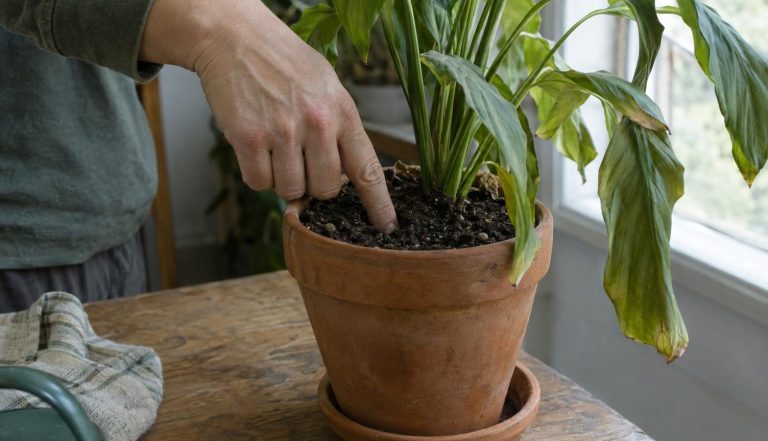
Push a finger into the potting mix, an inch or two down, before you decide anything at all.
Iowa State’s rule is short. If it is dry down an inch or two, water it. If you are unsure, wait at least one more day.
Dry at that depth under a drooping plant means the plant is thirsty.
Wet at that depth under a drooping plant means the opposite, and more water will make it worse.
A wet pot with a wilting plant in it is the combination worth learning. It is too much water, not too little.
Two more checks that need nothing you do not already own:
- Lift the pot. University of Maryland Extension suggests comparing its weight now with how it felt just after watering. Still heavy means still wet.
- Use a stick. For a large pot, Maryland’s guide says to push a dowel to the bottom and pull it out. Moist soil sticks to it or discolors it.
None of this calls for owning a moisture meter.
Your finger reaches the depth that tells you the answer.
What the leaves do say, once you look closely
The drooping is the same either way. The colors on the leaves are not.
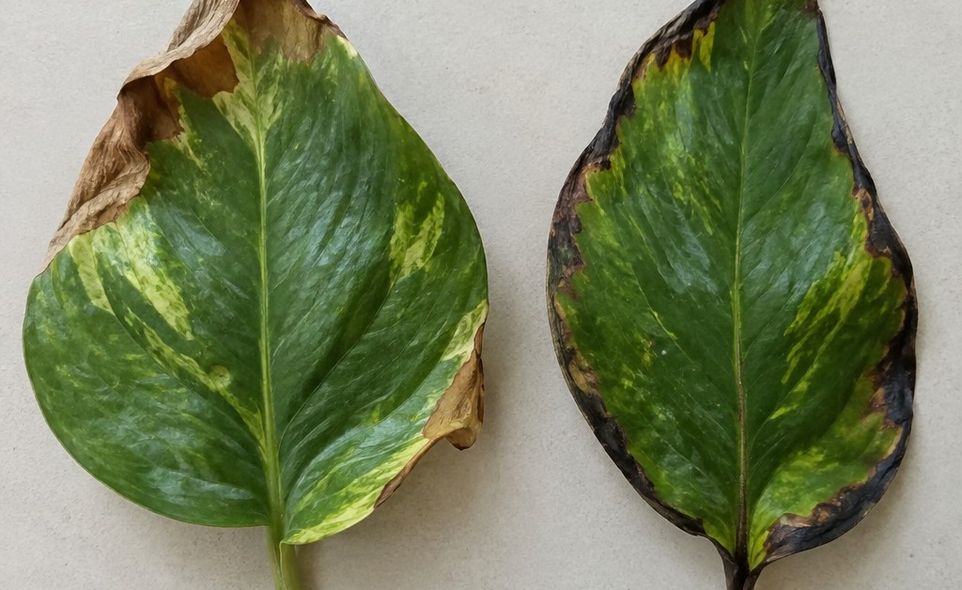
The University of Connecticut factsheet draws the clearest line between the two. Plants that are overwatered often show black edges along the leaves, stems and petioles. Brown leaf tips usually point the other way, to not enough water.
Black means wet. Brown and crisp means dry.
Maryland adds a sign that is easy to walk past. With too much water, the first leaves to wilt or yellow are the lower and inner ones, not the new growth at the top.
A soak that perks the plant up the same day is a good sign. It is not proof.
UConn is honest about why. When roots have already died from drying out, the plant can stay wilted even after you water it.
Check the roots when the pot stays wet
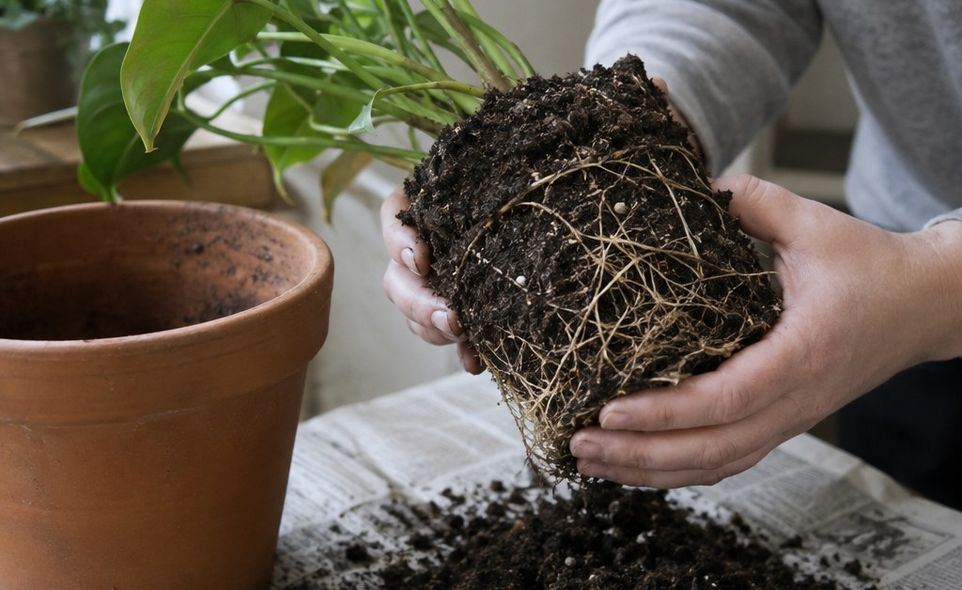
Soil is wet, the plant is drooping, and a few days of leaving it alone change nothing. Slide the plant out of its pot and look at what is holding it up.
Healthy roots are firm and pale. UConn describes the damaged kind plainly, saying roots also blacken, and advises trimming brown or black roots away before repotting into fresh mix.
Utah State University Extension explains why it happens.
Too much water will saturate soils, displacing air and starving the roots of oxygen.
Saturated soils, it goes on, will cause roots to die.
Utah State also notes that overwatering can cause as much stress as severe drought. That is the whole reason the two look alike from above.
A rotted root and a dried-out root both stop taking up water. That is why the leaves cannot tell you which one you have.
What to do once you know
If it is dry, water thoroughly, until water comes out of the bottom of the pot.
That is where Maryland’s guide says to stop.
Then let the root ball dry out before the next watering. Iowa State recommends that wet-and-dry cycle rather than a splash every day.
If it is wet, most of the work is stopping:
- Stop watering and let it dry down on its own.
- Empty any saucer sitting full of water underneath.
- Check the pot actually drains, because a pot with no hole holds water at the bottom whatever you do. Getting the pot and drainage right from the start prevents most of this.
- If nothing improves in a week, take it out and look at the roots.
The one thing not to do is water a little more anyway, just in case. That is exactly the loop Iowa State describes, and it turns one guess into a slow drowning.
When the soil is not the problem
Not every unhappy plant is a watering problem.
UConn notes that a lack of humidity, especially in winter, frequently causes leaves or buds to drop. Dry air is not dry soil, and more water will not answer it.
A cold draft, a sudden move to a darker corner or a pest can all produce leaves that look wrong.
Check the soil first because it is quick to rule out, not because it is always the answer.
Most of these decisions never come up if you start with plants that shrug off a missed watering. That is a fair reason to keep the first few easy.
If you are genuinely unsure after all this, wait a day and check the soil again. Nothing gets worse in a day from being left alone.
Guessing costs you a plant. Checking costs you thirty seconds.