
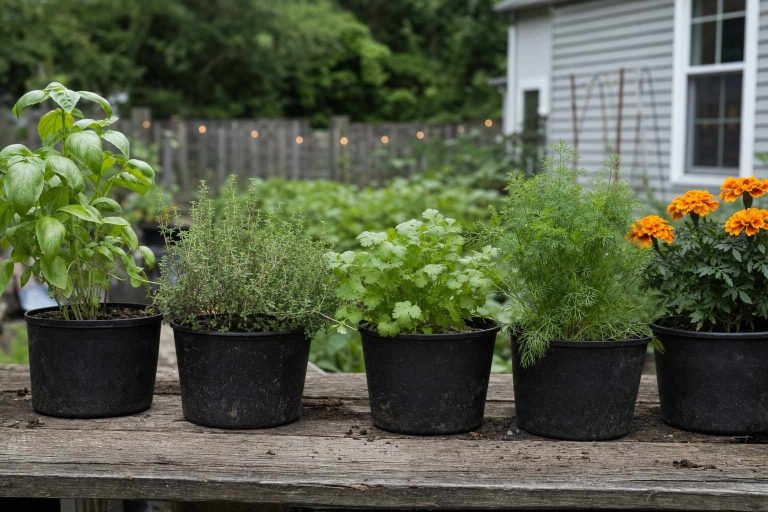
You did not fail because you killed a plant.
You picked the wrong plant for where you are right now.
Starting a garden gets much easier once you choose plants that are genuinely forgiving, not just marketed that way.
The right picks shrug off a missed watering, bounce back from too much sun, and keep growing while you figure things out.
That is not cheating. It is the sensible place to begin.
Herbs are the easiest wins on a windowsill or step
Herbs are the most forgiving category for beginners, and they reward you fast.
- Mint is almost impossible to kill. It spreads without much help, handles shade better than most herbs, and comes back hard after neglect. Keep it in its own pot to stop it taking over everything else.
- Rosemary likes dry conditions and does not mind if you forget to water for a week. It asks almost nothing and smells good every time you walk past.
- Basil wants warmth and a sunny spot, but within those conditions it is remarkably easy. Pick the leaves regularly and the plant keeps producing. Let it bolt (flower) and the leaves turn bitter, so a quick snip once a week keeps it going.
You do not need a garden bed. Just a couple of pots on a step or a bright windowsill will get you going.
If you want to try several herbs at once, compare herb seed starter kits on Amazon and pick a small set.
A note on the links: a few of them are Amazon affiliate links. Anything bought through one sends a small commission this way, and costs you nothing extra.
Marigolds are hard to kill
If you want color without constant attention, marigolds are the answer.
Marigolds grow fast, tolerate heat, and shrug off dry spells far better than most flowers. They also deter certain pests, which makes them useful neighbors if you grow herbs or vegetables nearby.
Deadhead the spent flowers (pinch them off at the base) and they keep blooming. Skip that step and they slow down, but they rarely die from it.
You can start them from seed or buy small plants. Either way, they are hard to get wrong.
Lettuce and salad greens are quick and low-pressure
Lettuce is one of the most beginner-friendly crops you can grow because the turnaround is fast.
Seeds sprout within a week. You can start harvesting outer leaves in three to four weeks without pulling the whole plant.
Even if the first batch bolts in summer heat, you have learned something cheap, and you can sow again in autumn.
A pot of mixed salad greens tells you whether you enjoy growing food before you commit to anything bigger. It is the lowest-cost way to find out.
For an even faster first harvest, a shallow tray of microgreens is ready to cut in two to three weeks.
Zucchini is almost too productive
Zucchini is beginner-friendly for a simple reason: it wants to succeed.
Give it warmth, reasonable sun, and occasional water, and it produces more than most people expect. First-time growers are often surprised by how much one plant yields.
Because zucchini grows visibly and quickly, it is genuinely encouraging when you are not yet sure you have the hang of this. One plant is usually enough.
Indoor options like snake plant and pothos
Not everyone wants to garden outdoors, especially in a flat or a place without much outdoor space.
Snake plants and pothos are the two most forgiving houseplants going. Both tolerate low light, both handle infrequent watering, and both survive in conditions that would kill most plants.
A snake plant in a corner you rarely think about will still be there looking fine six months later. A pothos can trail along a shelf with almost no attention and keep growing.
For a first indoor plant, either one builds confidence without demanding much back.
Sunflowers are hard to discourage
If you want something spectacular without much effort, sunflowers are a reliable choice.
They grow fast and they are hard to discourage. They are one of the few plants that looks impressive even when you have not done anything special. Kids enjoy growing them for the same reason.
Plant sunflower seeds directly in the ground or a large pot in a sunny spot, water occasionally, and they largely take care of themselves.
Why starting with forgiving plants matters
The bigger picture is simple.
When you start with plants that forgive beginner mistakes, a setback stays a small thing rather than a reason to stop entirely.
You learn the rhythms of watering and light without every error costing you.
And you build enough confidence to try something slightly more demanding next season.
Choose forgiving, low-maintenance plants so a setback never feels like failure. That is not lowering the bar. It is how most good gardeners began.
You want this to stay calm, not creep into one more chore. The approach you take matters as much as the plants you pick. It helps to think about how to do gardening the relaxing way from the beginning.
Still wondering whether gardening is worth your time as a way to feel better? The evidence is reassuring, and gardening and stress relief have been studied directly, with results that hold up.
One practical note: this article is about easy plants to grow, not plant-based remedies.