
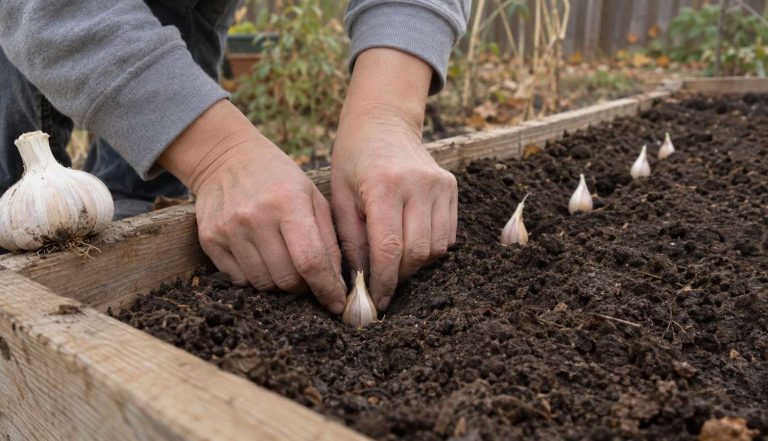
Garlic goes in once the soil four inches down has cooled to about 50 degrees Fahrenheit.
That is a cold-winter rule from South Dakota State University’s Extension service, the state’s free public gardening advice service.
Garlic is planted once in autumn and spends the winter growing roots, with little work from you.
Your winter decides the rest: when to plant, which type to buy and how deep the cloves go.
Softneck or hardneck?
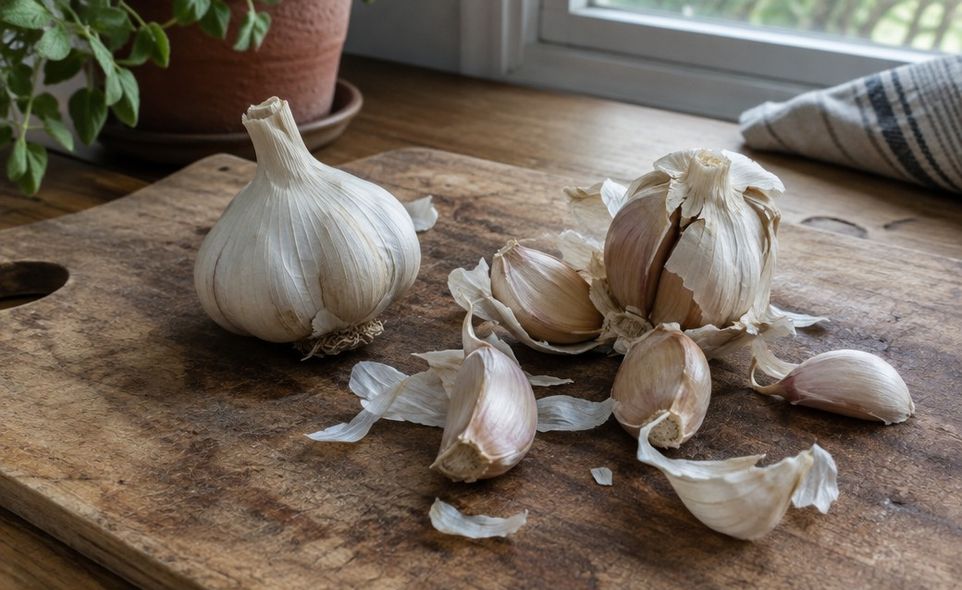
There are two families. Hardneck garlic sends up a tall flowering stalk. Softneck rarely does.
Oregon State University Extension, Oregon’s free public gardening advice service, says the stalk makes tiny bulblets on top. Softneck tends to form larger bulbs because energy is not diverted to those bulblets.
Hardneck types grow best in colder climates with a cool, damp spring. For a mild or warm winter, look at Florida, where the University of Florida’s IFAS Extension points gardeners to soft-necked varieties such as Artichoke or Creole.
Cold winter, try hardneck. Mild winter, try softneck. Your own state’s Cooperative Extension office can name the varieties that do well near you.
Buy seed garlic, not supermarket bulbs
It is tempting to plant a bulb from the kitchen. Skip that: a supermarket bulb may carry bacterial, viral or fungal disease.
Seed garlic is simply garlic sold for planting. Buy it from a local nursery or from a company that sells certified disease-free stock.
Buy bulbs sold for planting, and let the supermarket ones go to the kitchen.
Garlic does not make seed, so every plant starts as a single clove. You divide the bulb into individual cloves.
A planting calendar by climate
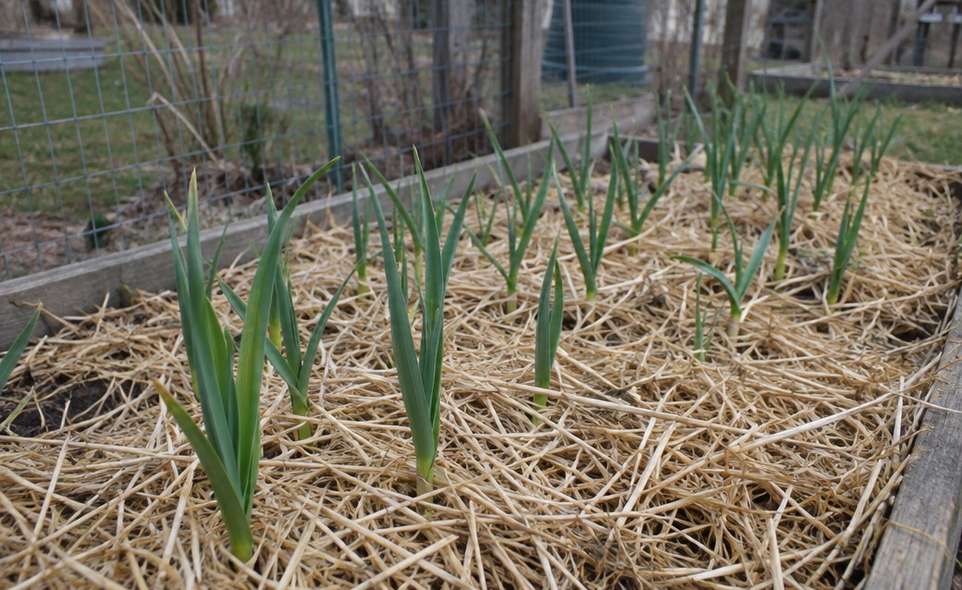
- Cold winter (South Dakota): wait until soil at four inches deep is about 50 degrees Fahrenheit. Plant, firm the soil and water well. After the ground freezes, add mulch.
- Mild, wet winter (Oregon): plant any time from September to November, the best window there. The roots grow through fall and winter.
- Warm winter (Florida): plant from late fall through early winter.
By early spring the garlic roots can support the rapid leaf growth that forms large bulbs.
If your winters are warm, the logic in why warm gardens have two planting seasons applies here. Garlic belongs to the cool season, so it goes in once the heat has broken.
In all three, garlic goes into cooling soil in fall or early winter and roots before spring.
Depth, spacing and mulch
The deeper planting is a cold-winter habit. Where winters are hard, plant each clove four to six inches deep, with four to five inches between cloves on every side.
Oregon State, with milder winters, says 2 inches deep and 2 to 4 inches apart.
Where winters are mild, the shallower depth is the better guide.
Set each clove root side down, which puts the pointed end up. Then press the soil down firmly to close any air pockets, and give it a thorough watering.
Mulch comes next, and in a cold climate it waits for the freeze.
Once the ground has frozen, spread straw or leaf mulch over the bed, six to eight inches deep. For a winter that never freezes, ask your local Extension office before you copy that number.
Beds and containers
Garlic wants full sun and well-drained soil. For heavy soil, Oregon State suggests a raised bed at least 10 to 12 inches tall.
If that is your situation, what to know about raised bed gardening covers what a raised bed makes easier.
A pot with drainage holes can work too. For the pot itself, how to start container gardening as a beginner walks through the choices.
What the rest of the year looks like
Over winter, most of the growth is underground, and there is not much to do.
By early spring the roots can support rapid leaf growth. Oregon State’s spring list is short: weed regularly, because garlic does not tolerate competition, and feed in early spring and again lightly in early May.
Water only if soils are very sandy or May and June are especially dry. Then water to a depth of 2 feet every 8 to 10 days, tapering off in mid-June.
In Oregon the bulbs mature around mid-July, so start checking in late June, and do not wait for the leaves to die back. In a warm-winter garden like Florida’s, lift the bulbs once roughly half the leaves have turned dry and bent over toward the soil.
Lift the bulbs, then dry them for a few days in a ventilated spot with bright indirect light. Store them in a cool, dark place.