
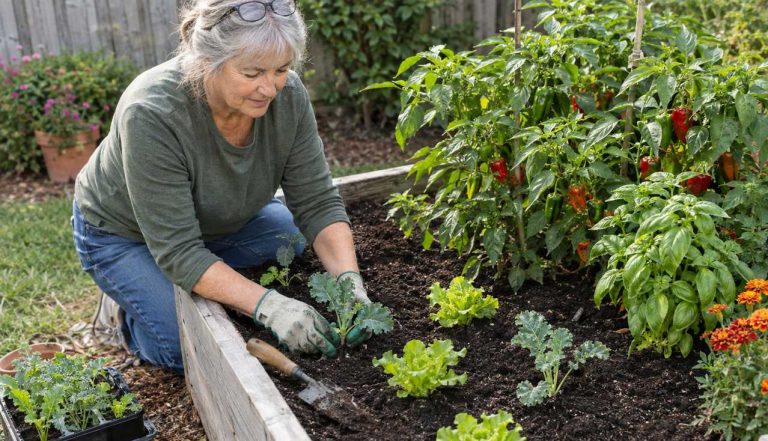
Most gardening advice assumes one growing season. Plant in spring, harvest through summer, then let the garden go quiet for winter.
That model comes from cooler climates, where summer is the good season and winter shuts everything down.
In a long, hot-summer climate, the model runs backward. Summer is often the hardest season here, not the easiest one, and the cool months carry a real harvest of their own.
Garden on the one-season assumption anyway, and you give up roughly half your growing year.
You may never notice what you missed.
Why summer is the hard season, not the easy one
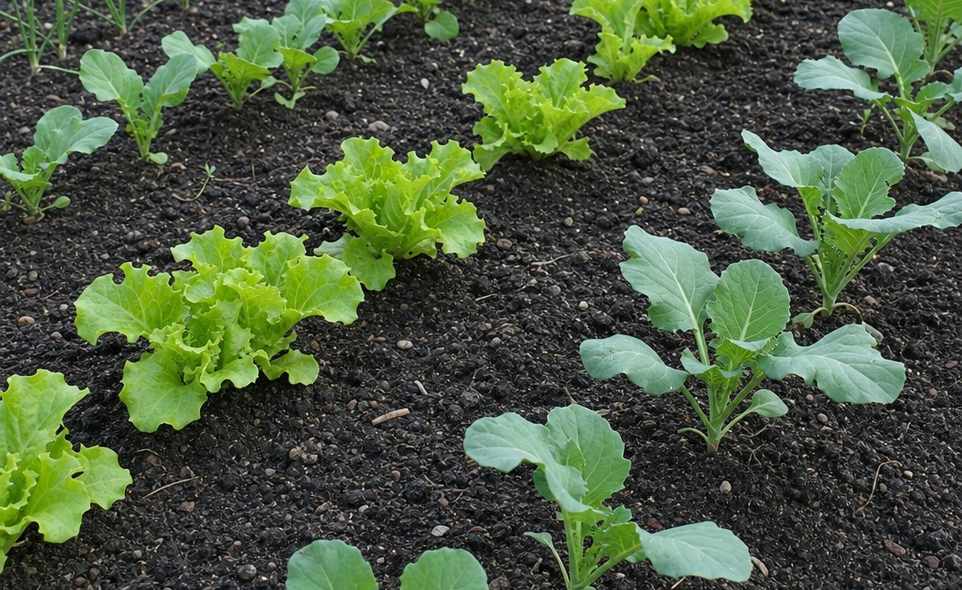
Heat and humidity are a real strain on a lot of familiar vegetables, not just a sensitive few.
Carrots, potatoes, beets and turnips are one clear example. In a hot-summer climate, all four are grown as winter crops, not spring ones.
That pattern is explored further in which vegetables actually handle summer heat.
It is not a quirk limited to those four crops. Most cool-season vegetables, roots and leafy greens especially, are bred to size up during the cooler part of the year.
Push them through real summer heat instead, and they bolt, stall or rot before they are worth harvesting.
A vegetable that struggles in July is just behaving exactly as it was bred to, not a sign you did something wrong.
What the cool months are actually for
The cool months here are prime growing time for a whole set of crops most gardeners plant reflexively in spring instead, not an off-season waiting to be filled.
Roots, brassicas, lettuce and spinach all want shorter, cooler days. Grown then, rather than forced through a hot summer, they size up properly and hold in the ground longer.
That is the flip a cold-climate gardener has to make. What reads as the shoulder season up north is the real growing season here.
A garden that only plants for summer is only using one of its two working seasons.
The changeover, and what to do with an empty bed
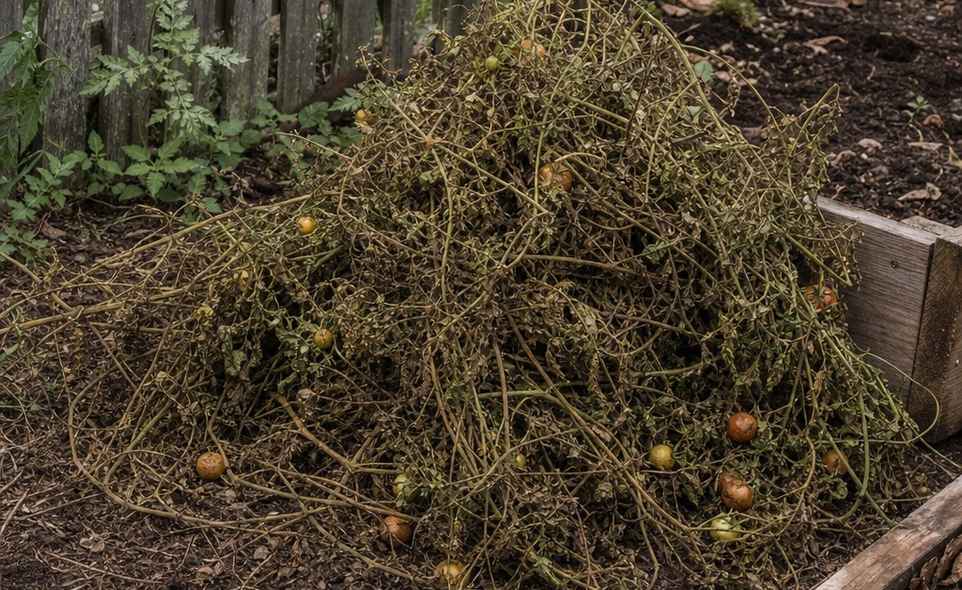
The turn happens twice a year. Spring’s cool-season crops finish and warm-season ones take over, then in fall the heat breaks and cool-season planting starts again.
That second turn is the one worth planning for, because a summer bed does not have to sit idle waiting for it.
A few things to do with a bed between crops:
- Run a soil test through your county Extension office to check pH and fertilizer needs before the next planting.
- Solarize the bed. This uses summer’s own heat to warm bare soil.
- Sketch the next planting on paper first. Keep taller crops on the north or west side so they do not shade shorter ones, per Georgia’s Extension guidance.
Georgia’s Extension service recommends a pH of 6.0 to 6.5 for most vegetables, except Irish potatoes, which want a more acidic 5.0 to 6.0. Florida’s Extension service says solarizing also knocks back nematodes, the microscopic worms that damage roots and cut yield.
An empty bed in high summer is not wasted time. It is the one stretch of the year when the soil can be reset before it works again.
Georgia’s Extension service also recommends planting the next in-season crop soon after the last harvest is completed, so the bed stays productive continuously.
That quick turnaround works especially well in a raised bed with fast-draining soil, which warms and dries out faster than open ground.
Not every empty stretch has to sit fallow.
If you would rather keep something growing through peak summer than solarize, some warm-season crops fill that gap directly. Florida’s Extension guide lists New Zealand spinach and Malabar spinach, neither a true spinach, as reliable summer greens.
Its North Florida table also lists okra for planting from late March through July.
Getting your own dates, which is a local question
Every specific date in this article comes from two state Extension services, not a universal calendar.
Georgia’s Extension service covers general vegetable gardening for that state. Florida’s Extension service goes further, giving separate planting tables for North, Central and South Florida.
Dates differ even inside one state.
If a single state needs three different tables, dates shift even more between regions with different frost patterns.
Every American state university runs a free Cooperative Extension service. Your own state’s publishes a planting chart built for your zone, and that is the one to use, not Georgia’s or Florida’s.
Those charts are built around frost timing, which is worth understanding first through your own frost dates.
Once the changeover is routine, the calendar stops looking like one long summer with a dead stretch at each end.
A cool-season bed fills back in right as the heat peaks.
By the time a cold-climate garden is fully shut down for winter, this one is just getting started.