
Some plants just make you want to stay outside a little longer.
Not because they are high-drama or hard-won. Because they smell good, move gently in a breeze, or simply look soft and green and easy. They make the garden feel like a place to be rather than a project to finish.
The plants that do that tend to be the forgiving ones, which is a happy coincidence.
Scented herbs are the low-effort high-return group
If you only grow one thing for pleasure, grow something you can smell.
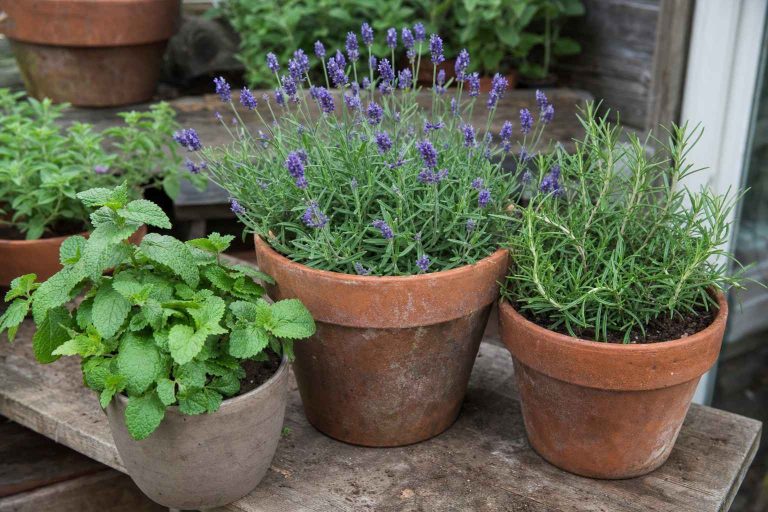
Lavender, rosemary, and mint are the easiest places to start. Run your hand along a sprig of lavender on your way past.
Snap a leaf of rosemary when you are heading inside. These are not gardening tasks. They are small, pleasant moments.
They are also nearly indestructible. Lavender and rosemary are drought-tolerant once settled. Mint spreads readily, which some people love and some people contain, so a pot is the sensible choice.
- Lavender grows well in a sunny spot, in well-drained soil. Little watering needed once it is established.
- Rosemary is similarly drought-tolerant, happy in a pot, and doubles as a kitchen herb.
- Mint grows with enthusiasm. Keep it in its own container and it will not take over the bed.
If you want to try a few varieties, you can compare herb starter sets on Amazon.
A note on the links: a few of them are Amazon affiliate links. Anything bought through one sends a small commission this way, and costs you nothing extra.
Jasmine is worth growing just for being there
Jasmine is worth mentioning separately because the scent is its whole contribution, and that is enough.
A single jasmine plant near a path or a seating area fills the air on warm evenings without you doing anything. It climbs if you give it something to lean on, or trails if you do not. Some varieties are hardier than others, so it is worth checking what suits your climate, but the effort ceiling is low.
You do not need to be tending it to benefit from it, and that is by design.
Grasses give movement without maintenance
Ornamental grasses do something no other plant does quite as well: they move.
A light breeze through a clump of fountain grass or blue oat grass is one of those quiet things that makes a garden feel alive.
They do not need deadheading, rarely need dividing, and mostly take care of themselves through the season.
For a small garden or a large pot, a single clump is enough. You are not building a meadow. You are adding something that softens the space and catches the light.
Soft greens and simple textures
Not everything needs to be showy.
Some of the most restful gardens lean heavily on green. Ferns in a shaded corner, a hosta in a pot, a simple row of box or pittosporum for structure.
The texture does most of it. It looks calm because it is calm.
A few pots of well-chosen greenery do more for a garden’s mood than a chaotic planting of everything flowering.
Ferns thrive in shade where little else does. Hostas are reliable, leafy, and nearly unkillable. Pittosporum takes clipping if you want tidiness, but also manages fine without it.
What all of these have in common
None of them demand daily attention.
None of them will collapse dramatically if you miss a watering or go away for a week. They are worth growing for being pleasant to live alongside, not for being impressive to manage.
That is the whole idea behind starting small and keeping the garden forgiving. The garden is supposed to feel like a break, not a performance. Pick plants that agree with that goal.
None of them will collapse dramatically if you miss a watering or go away for a week.
Studies link time spent in a garden with lower stress. Part of what drives that is the sensory experience of being outside among living things: the smell, the texture, the gentle movement.
Researchers behind a 2017 review of 22 separate studies in Preventive Medicine Reports connected gardening with reduced anxiety and greater satisfaction with life. You do not need a specialist collection to get there. A pot of lavender near the door counts.
The simplest rule: choose plants you enjoy being near, and give them an easy home.
If you are just starting out, a few pots of herbs and a grass or two is a fine beginning. You can read more about choosing easy setups that stay relaxing if you want to think through the wider approach.
A note: this article is about plants that are pleasant to grow and be around. Nothing here is a treatment for anxiety, stress, or any other condition. If anxiety is affecting your daily life, talk to your doctor.