
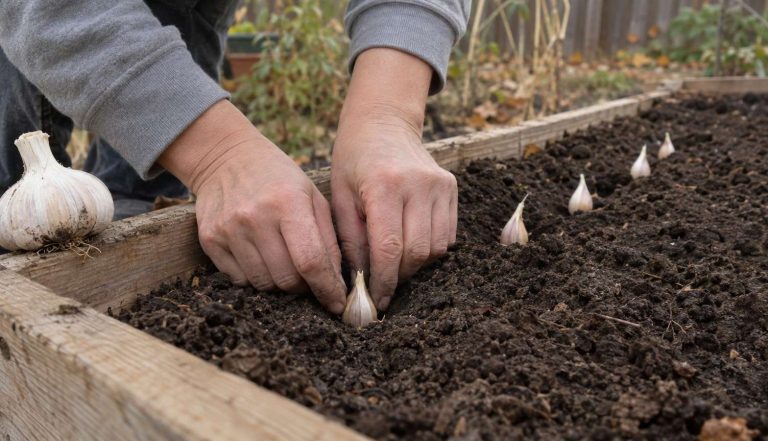
Garlic goes in once the soil four inches down has cooled to about 50 degrees Fahrenheit.
That is a cold-winter rule from South Dakota State University’s Extension service, the state’s free public gardening advice service.
Garlic is planted once in autumn and spends the winter growing roots, with little work from you.
Your winter decides the rest: when to plant, which type to buy and how deep the cloves go.
Softneck or hardneck?
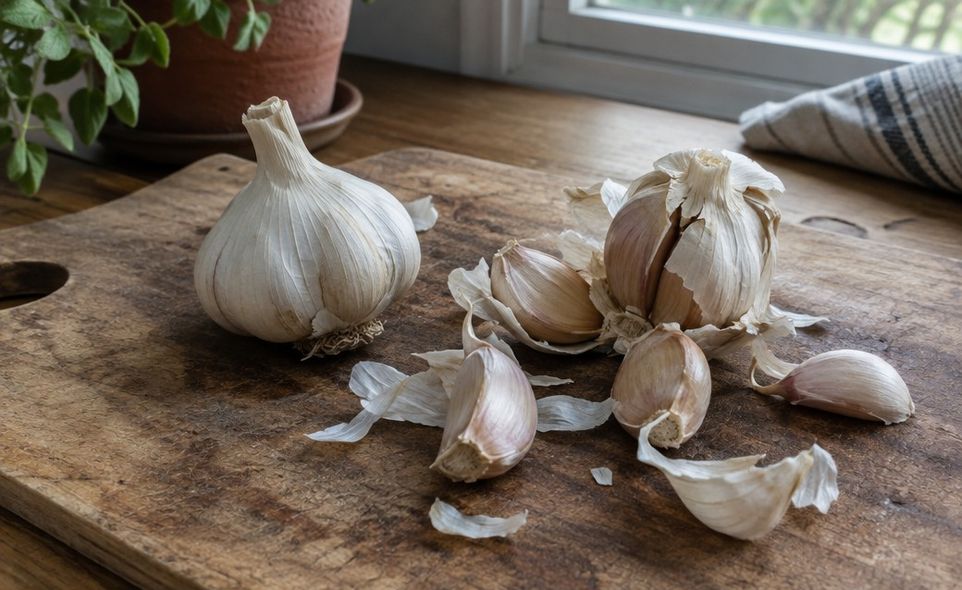
There are two families. Hardneck garlic sends up a tall flowering stalk. Softneck rarely does.
Oregon State University Extension, Oregon’s free public gardening advice service, says the stalk makes tiny bulblets on top. Softneck tends to form larger bulbs because energy is not diverted to those bulblets.
South Dakota State says hardneck types grow best in colder climates with a cool, damp spring.
For a mild or warm winter, look at Florida. The University of Florida’s IFAS Extension, Florida’s free public gardening advice service, points gardeners to soft-necked varieties such as Artichoke or Creole.
Those are Florida’s recommendations for Florida gardens. Cold winter, try hardneck. Mild winter, try softneck.
Your own state’s Cooperative Extension office can name the varieties that do well near you.
Buy seed garlic, not supermarket bulbs
It is tempting to plant a bulb from the kitchen. Skip that.
South Dakota State says not to use garlic from the grocery store, because it may be harboring bacterial, viral or fungal diseases.
Seed garlic is simply garlic sold for planting. South Dakota State says to buy it from a local nursery or from a company that sells certified disease-free stock.
Buy bulbs sold for planting, and let the supermarket ones go to the kitchen.
Garlic does not make seed, so every plant starts as a single clove. Florida’s IFAS explains that you divide the bulb into individual cloves.
A planting calendar by climate
Here is what each source says, side by side. These are three states, not a rulebook for yours.
- Cold winter (South Dakota): wait until soil at four inches deep is about 50 degrees Fahrenheit. Plant, firm the soil and water well. After the ground freezes, add mulch.
- Mild, wet winter (Oregon): September through November is the best time to plant, per Oregon State. Garlic roots develop in the fall and winter. By early spring they can support the rapid leaf growth that forms large bulbs.
- Warm winter (Florida): plant from late fall through early winter, says IFAS.
If your winters are warm, the logic in why warm gardens have two planting seasons applies here. Garlic belongs to the cool season, so it goes in once the heat has broken.
In all three states, garlic goes into cooling soil in fall or early winter and roots before spring.
Depth, spacing and mulch
Here the guides differ, and South Dakota State ties its deeper planting to hard freezes.
South Dakota State, with its hard winters, says to space cloves four to five inches apart in all directions and four to six inches deep. Oregon State, with milder ones, says 2 inches deep and 2 to 4 inches apart.
So the deeper planting is a cold-winter habit.
Where winters are mild, the shallower Oregon depth is the better guide.
Oregon State says to set each clove root side down, which puts the pointed end up. South Dakota State then says to firm the soil so there are no air spaces and water thoroughly.
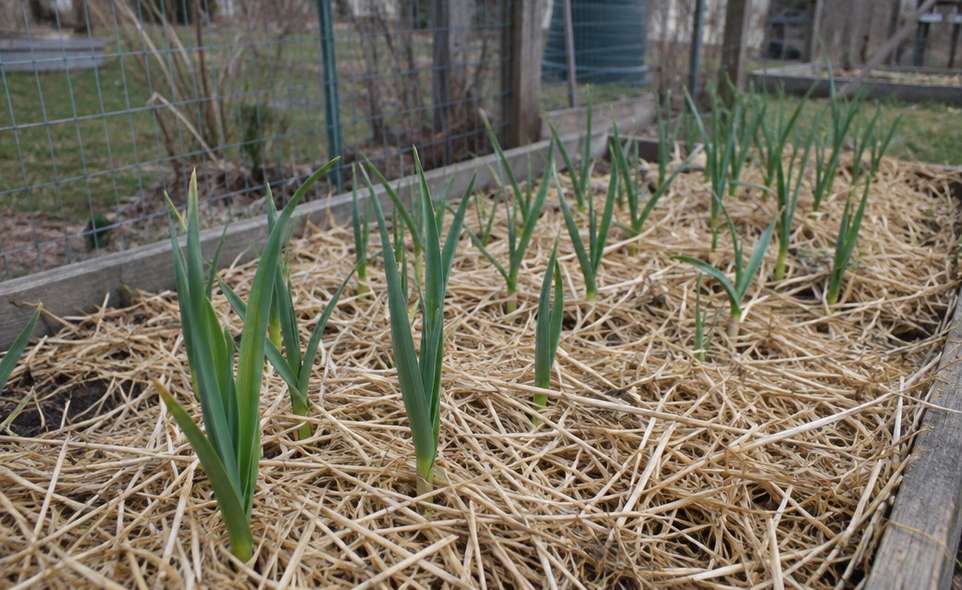
Mulch comes next, and in a cold climate it waits for the freeze. When the soil has frozen, South Dakota State says to put six to eight inches of straw or leaf mulch on top.
None of these Extension guides gives a mulch depth for a winter that never freezes. Ask your local Extension office before you copy that number.
Beds and containers
Garlic wants full sun and well-drained soil, according to Oregon State. For heavy soil it suggests a raised bed at least 10 to 12 inches tall.
If that is your situation, what to know about raised bed gardening covers what a raised bed makes easier.
A pot with drainage holes can work too, though none of these guides covers containers.
For the pot itself, how to start container gardening as a beginner walks through the choices.
What the rest of the year looks like
Over winter there is not much to do.
Over winter, most of the growth is underground.
By early spring, Oregon State says, the roots can support rapid leaf growth. Its spring list is short: weed regularly, because garlic does not tolerate competition, and feed in early spring and again lightly in early May.
Oregon State says to water only if soils are very sandy or May and June are especially dry. Then water to a depth of 2 feet every 8 to 10 days, tapering off in mid-June.
Bulbs there mature around mid-July, and Oregon State says to start checking in late June.
It adds not to wait for the leaves to die back. Florida’s IFAS says to harvest when about half of the leaves have dried and bent towards the ground.
Lift the bulbs, then dry them for a few days in a ventilated spot with bright indirect light. Store them in a cool, dark place.
Leaves drying and bending over are a harvest sign, not a problem to fix.