
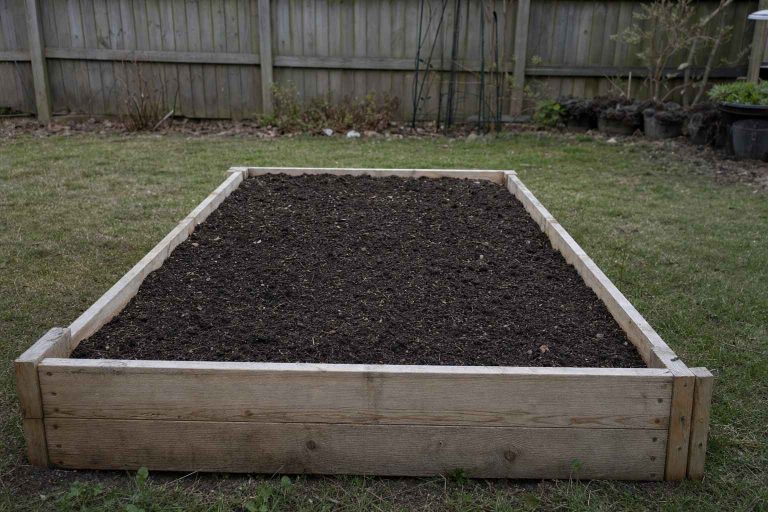
Raised bed gardening has a reputation for being serious or ambitious. Rows of perfectly tended beds, a whole weekend project, a lot of upfront work.
The reality is quieter than that.
A raised bed is really just a small, defined space with good soil. You fill it, tend it, and the rest is much more manageable than a patch dug straight into the ground.
Why it is easier on your body
The single most underrated thing about raised beds: less bending.
Most ground-level gardening means crouching, kneeling on hard soil, or working hunched over a low border. If your back or knees complain about that, it stops being relaxing pretty quickly.
A bed at a comfortable height changes the experience. You sit on the edge, or stand and reach in easily. You are not fighting the position.
It does not need to be tall to help. Even a bed eight to twelve inches high is noticeably gentler than working at ground level.
If kneeling is the issue, a good kneeler pad helps for everything else in the garden too. You can compare garden kneeler pads on Amazon and pick one that suits you.
A note on the links: a few of them are Amazon affiliate links. Anything bought through one sends a small commission this way, and costs you nothing extra.
Why a small, contained space works
There is something about a defined space that makes gardening feel manageable.
A raised bed has clear edges. You can see exactly what you have. There is no creeping border that slowly expands, no patch of ground that quietly connects to the rest of the lawn.
Start small. An overplanted garden becomes one more source of stress, not relief.
A single bed, four feet by four feet, is plenty to start. You can tend it in fifteen minutes. You can see progress. If something goes wrong in one corner, it does not feel like a disaster.
That small scale is what keeps gardening feeling like a break rather than a project.
The soil advantage
This is the part that makes raised beds genuinely easier to get right: you control the soil.
Ground soil can be compacted, full of clay, full of stones, or just tired. With a raised bed, you fill it with a proper mix and you start clean.
A reasonable starting mix is roughly half topsoil and half compost. That gives roots something loose and nourishing to move through, drains reasonably well, and holds enough moisture that you are not watering every day.
Good soil is the quiet reason things actually grow. If a plant fails in a raised bed, the soil probably was not the problem. That shifts the odds in your favor before you have planted a single thing.
Fewer weeds
Not zero weeds. But noticeably fewer.
When you fill a raised bed with a clean mix, you are not importing whatever weed seeds were living in the ground beneath you. Some will drift in from the air, but the baseline is much lower.
Less weeding means less time on the unglamorous part, and more time on the part that actually feels good.
This is one of those things that sounds small but matters. Weeding is the piece of gardening that most easily tips into feeling like a chore. Reducing it is worth it.
Being honest about the upfront part
Raised beds do ask for a little work at the beginning.
You need the bed itself, which can be wood, galvanised steel, composite, or simple concrete blocks. Cedar is a popular choice because it resists rot naturally; steel lasts a long time and looks clean.
Budget options like stacking blocks or pressure-treated timber work fine if the materials are a concern.
You also need to fill it. Buying enough soil for even a modest bed feels like a lot the first time you do the calculation. A four-by-four-by-twelve-inch bed needs roughly two to three cubic feet of mix.
None of this is complicated. It is just one afternoon to get set up, and then it is done.
If you are keeping it calm and small, a simple kit bed and a few bags of compost is a perfectly reasonable starting point. The goal is not a perfect installation. The goal is to get started without dreading it.
What to plant first
Start with plants that forgive you.
Lettuce, spinach, radishes, and herbs like basil, parsley, and chives all do well in raised beds and do not punish a missed watering. Tomatoes and cucumbers work too, but they take more attention and have higher stakes.
Come back to those once the space feels familiar.
A small harvest of herbs you actually use beats an ambitious vegetable patch that slowly becomes a source of guilt.
A raised bed makes gardening easier, not medically therapeutic.
For more on keeping the gardening experience calm and manageable, it helps to read about gardening for stress relief the right way. Do that before you build the expectations up.
You may be wondering whether any of this genuinely helps on the mental side.
That is a fair question, and the evidence on gardening and stress levels is worth a look.
One note: gardening is good for how you feel, but it is not a treatment for pain conditions or anything health-related. If your back or knees are a serious concern, talk to someone who can actually help with that.
A raised bed makes gardening easier, not medically therapeutic.