
Most people garden for the result: flowers, vegetables, something growing. Mindful gardening shifts the focus. The garden becomes the break itself, not a task you get through on the way to resting.
You do not need a special technique.
You need to slow down enough to notice what is already there.
Put the phone down before you go outside
This sounds small. It changes everything.
When the phone is in your pocket, part of your attention stays with it. You will check it.
You will be somewhere else.
Leave it on the counter. Give yourself fifteen minutes that belong only to the garden. It is not a sacrifice; it is exactly the goal.
A 2017 review in Preventive Medicine Reports pooled 22 studies and found gardening was linked with lower anxiety and higher life satisfaction. That connection does not come from scrolling through plant pictures.
It comes from being present with the actual plants.
Let one task be the whole task
The mind races when it is always looking ahead. Gardening is useful here because a simple, physical task pulls you back to what your hands are doing.
Pick one thing: deadhead the geraniums, water the herb pots, pull the weeds along one edge of the bed. Not a list.
One task is enough. Finishing it is not the point; settling into it is.
Notice the rhythm of it. Pulling weeds has a pull-and-release to it. Watering has a pace.
Let your breath slow down to match.
Use your senses deliberately
The garden is full of sensory detail that your brain normally skips over. This is where you can lean in.
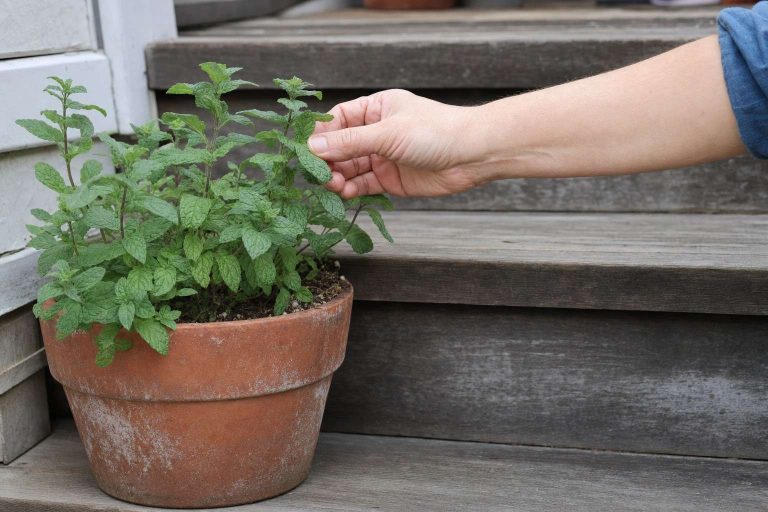
Pinch a rosemary sprig and bring it close. The smell is sharp and clean. Crumble dry soil between your fingers and feel it go from clumped to loose.
Look at a plant you walk past every day and find something you have not noticed before. A new shoot, a change in color, a curl in a leaf.
This kind of attention does not require effort. It just requires pausing.
Your mind cannot be in two places at once.
When you are genuinely attending to a smell or a texture, the noise quiets down.
Slow your pace below comfortable
If you normally garden at a brisk clip, try cutting that pace in half. It will feel slightly odd at first.
Walk to the shed slowly. Fill the watering can and carry it without rushing. Pour it low and steadily rather than tipping it fast.
The physical slowness creates a kind of permission.
You are not behind. There is no deadline. The garden will not judge you for taking your time with it.
Gardening calms you because it is slow, hands-on, and present, not because it is productive. That only works if you let it be slow.
Notice what has changed
Plants change constantly, and almost nobody looks closely enough to catch it.
Before you start working, take one slow circuit of what you are growing. Look for what is different from the last time you were out.
A new bud forming, a leaf that has finally uncurled, the first sign that a seed has germinated.
This is not a chore, and it is genuinely interesting.
Small changes in a living thing you are tending are satisfying in a way that is hard to explain. That satisfaction is part of why this helps.
If you want to understand that connection more, can gardening really reduce stress levels looks at what the research actually found.
Breathe to the rhythm of what you are doing
This is not a breathing exercise. You do not need to count.
When you are doing something repetitive, like watering a row of pots or working compost into a bed, notice your breath. Let it settle into the rhythm of the task. Inhale on the reach, exhale on the return.
Nothing strict. Just a loose connection between what your hands are doing and what your lungs are doing.
Repetitive physical tasks are easy for a restless mind to anchor to. That is one reason doing this the relaxing way, at a slow steady pace, matters more than technique.
The breath slows because the task is slow. You do not have to force it.
Keep it short enough to stay a break
Fifteen to twenty minutes done calmly is better than an hour done in a rush.
When you push past the point of enjoyment because you feel you should finish, the garden stops being a rest and becomes a project. That is where stress creeps back in.
- Come out for a single, contained task
- Stop before you are tired
- Leave something for next time
The point is how it makes you feel, not how much it produces.
You may be new to this, or want to build it into a daily habit. There is more on that in simple ways to improve your wellness through gardening.
One note: this kind of garden time supports how you feel, but it is not a treatment for anxiety or depression. If you are struggling, please talk to someone qualified to help.
The notes here cover gardening and wellbeing in general terms, not medical guidance. Most people benefit from gardening, but it isn’t a treatment, and persistent low mood is worth discussing with a doctor.