
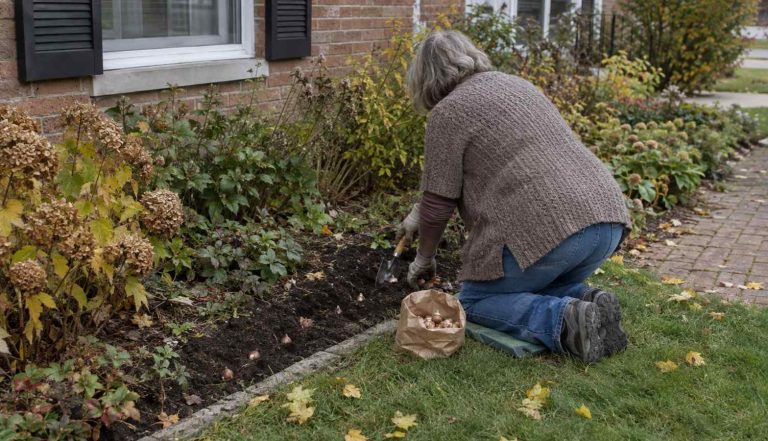
You bought a bag of tulip bulbs in October, and now it sits on the counter. The bag says “plant in fall” and nothing more.
Plant in mid to late fall, once the soil has cooled below 60°F.
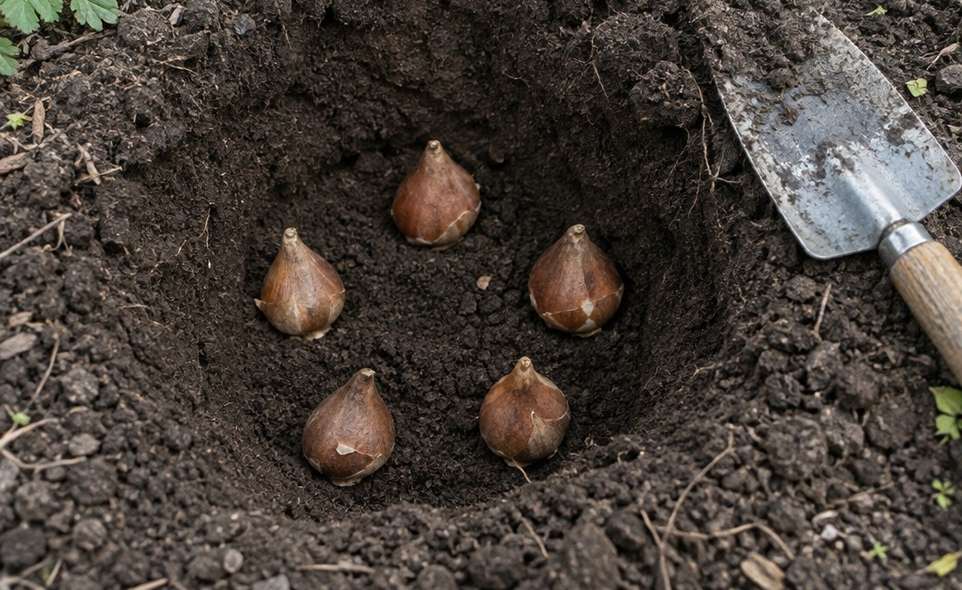
The number to watch is 60°F. Wait until the soil is below it, then plant each bulb pointed tip up, 6 to 8 inches deep.
If your winters are warm, the plan changes. Tulips need a long cold spell to flower, so a warm-zone gardener buys pre-chilled bulbs and treats the planting as a one-season show.
What the soil temperature tells you
A calendar date means different things in different yards.
The Burke County office of N.C. Cooperative Extension, North Carolina’s free public gardening advice service run through its state universities, puts the rule plainly.
Typically the soil temperature should be below 60°F.
Tulips also need that cold. The same office says spring bulbs need about 12 to 16 weeks of chilling to flower well.
Plan on about 12 to 16 weeks of cold.
Your own first frost date is a useful reminder to start checking. The soil reading is what tells you to plant.
A timing table by climate
Use the row that matches your winter. Your own state’s Cooperative Extension office can confirm local timing.
| Climate | When to plant | What to do |
|---|---|---|
| Cold winter | Once soil is below 60°F | Winter supplies the chill. Plant normally |
| Mild winter | Once soil is below 60°F | Check whether winter reaches 12 to 16 weeks of cold. If not, follow the warm-zone row |
| Warm zone | In winter, per Florida’s Extension | Buy pre-chilled bulbs (chilled two to four months). Expect one season |
Not sure which row is yours? Your hardiness zone is a quick way to place your winter.
How deep and how far apart
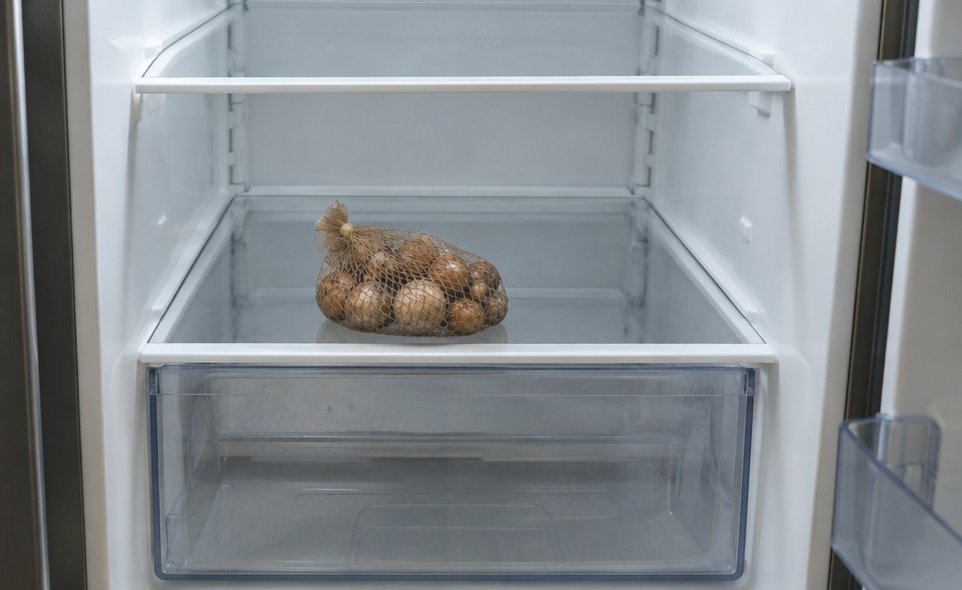
Iowa State University Extension, the state university’s public gardening advice service, gives a depth rule that works for any spring bulb: plant at 3 to 4 times the bulb’s widest diameter.
For tulips and daffodils, that works out to 6 to 8 inches deep.
Iowa State says large bulbs, such as tulips and daffodils, should be spaced 6 inches apart.
Here is the planting order:
- Dig a hole so the bulb sits 6 to 8 inches deep.
- Set the bulb in with the pointed tip up and the flat, rooty end down.
- Space bulbs 6 inches apart.
- Cover with soil and water once.
The tip is the narrow end, and the roots grow from the flatter base.
Tulips in pots
Pots work well if you don’t have a bed.
A simple rule of thumb is to use the same depth as in a bed: 3 to 4 times the bulb’s width. A deep pot makes that easy.
Check that the pot has drainage holes before you fill it. If you are new to pots, starting container gardening covers the basics of pots and drainage.
What changes in a warm zone
This is where the bag’s “plant in fall” advice falls apart.
The University of Florida’s IFAS Extension, the state’s free public gardening advice service, writes for Florida gardeners. Its advice comes down to three points:
- Use bulbs that have been pre-chilled for two to four months.
- Plant them in the yard in the winter.
- Expect one season. Florida gardeners can grow tulips if they just think of them as annuals, plants that live for one season.
Check the package or ask the seller whether your bulbs were pre-chilled. If you are not sure, chill them yourself for two to four months before planting.
The bulbs will bloom once and may hang on for a season. They typically won’t bloom again.
That is Florida’s advice, built on Florida’s climate.
Your own state’s Cooperative Extension office will have timing that fits your area.
Daffodils on the same day
Daffodils take the same depth and spacing as tulips, so they can go in the same day.
What to do this week
Put a reminder on your phone for this weekend. In the morning, push a soil thermometer into the ground where you plan to plant and read it.
If it reads below 60°F, plant that day. If it doesn’t, check again next weekend.