
The forecast turns cold sometime in the afternoon, and by evening the low is written in plain numbers you cannot argue with.
You have a few hours before dark, maybe less.
What you do in that window matters more than anything you do after.
Frost protection is not complicated. It mostly comes down to timing, and a handful of steps people skip.
The specifics below come from Georgia’s Extension service and Florida’s Extension service, two state Cooperative Extension programs. Your own hardiness zone and your own state’s Cooperative Extension service are the better source for exact local dates.
What actually helps in the hours you have
Not every plant needs the same treatment tonight.
Plants growing close to the ground are usually protected already. Heat radiating from the soil keeps them a few degrees warmer than the air above.
- Recently planted or still-establishing plants, first, since they are the most vulnerable
- Tall, open plants next, since they catch less heat off the soil
- Tender perennials whose roots you want to keep for spring
Leave the plants closest to the ground until last. They usually need the least help.
If you are still finding your footing, forgiving picks for first-time gardeners help build confidence before a night like this one.
Covering plants done right
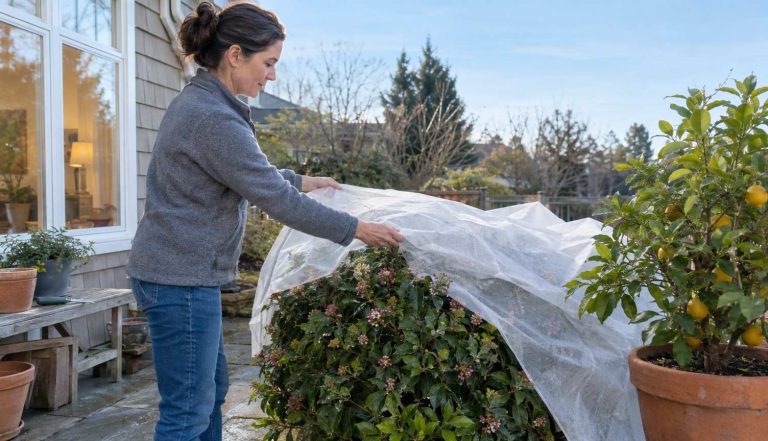
A sheet, an old blanket, or a cardboard box, draped loosely over a plant, genuinely helps. Georgia’s Extension service lists all three as effective against low temperature injury.
Plastic sheeting is not on that list.
The reason is specific. A plant under plastic can heat up rapidly once the sun returns, which undoes the benefit of covering it overnight.
A simple frame, built from lengths of PVC or something similar, keeps the cover from resting on the plant. That stops the cover’s weight from breaking leaves and stems.
Take the cover off again in the morning. Trapped solar heat needs somewhere to go.
Containers need a different fix. Wrap the base in plastic, burlap, or an old blanket to cut heat loss from the pot itself.
The mulch and water steps people skip
Two things help most before the forecast turns, and both are easy to forget under time pressure.
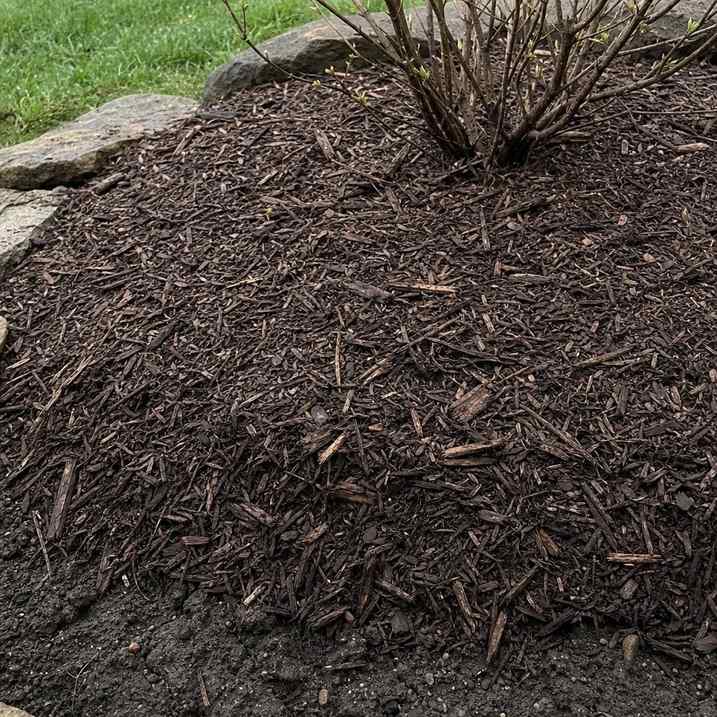
Mulch slows heat loss from the soil and evens out the swings at the root zone. For a tender perennial, that can be the difference between coming back next spring and not.
Watering runs against instinct on a cold night, but it helps.
Moist soil absorbs more heat than dry soil. That helps keep the temperature around a plant a little higher through the night.
Check water needs before a predicted cold snap and water if the soil is dry. Mulching the base afterward helps hold that moisture where it can do the most good.
Why damage can start above freezing
Two different things go wrong on a cold night. Only one of them is the thermometer.
- Tropical plants and summer annuals never really adjust to cold. Many suffer chilling injury at temperatures below 50 degrees Fahrenheit, well above the point where water actually freezes.
- Subtropical and temperate plants are different. They can harden off, or acclimate, and a properly conditioned temperate plant can handle temperatures well below freezing.
That hardening process has its own timing problem. Triggered too early by a stretch of cool weather, it shortens the growing season for no reason.
Triggered too late, an early frost catches the plant before it is ready.
Wind on a cold night causes its own kind of damage, separate from the cold itself.
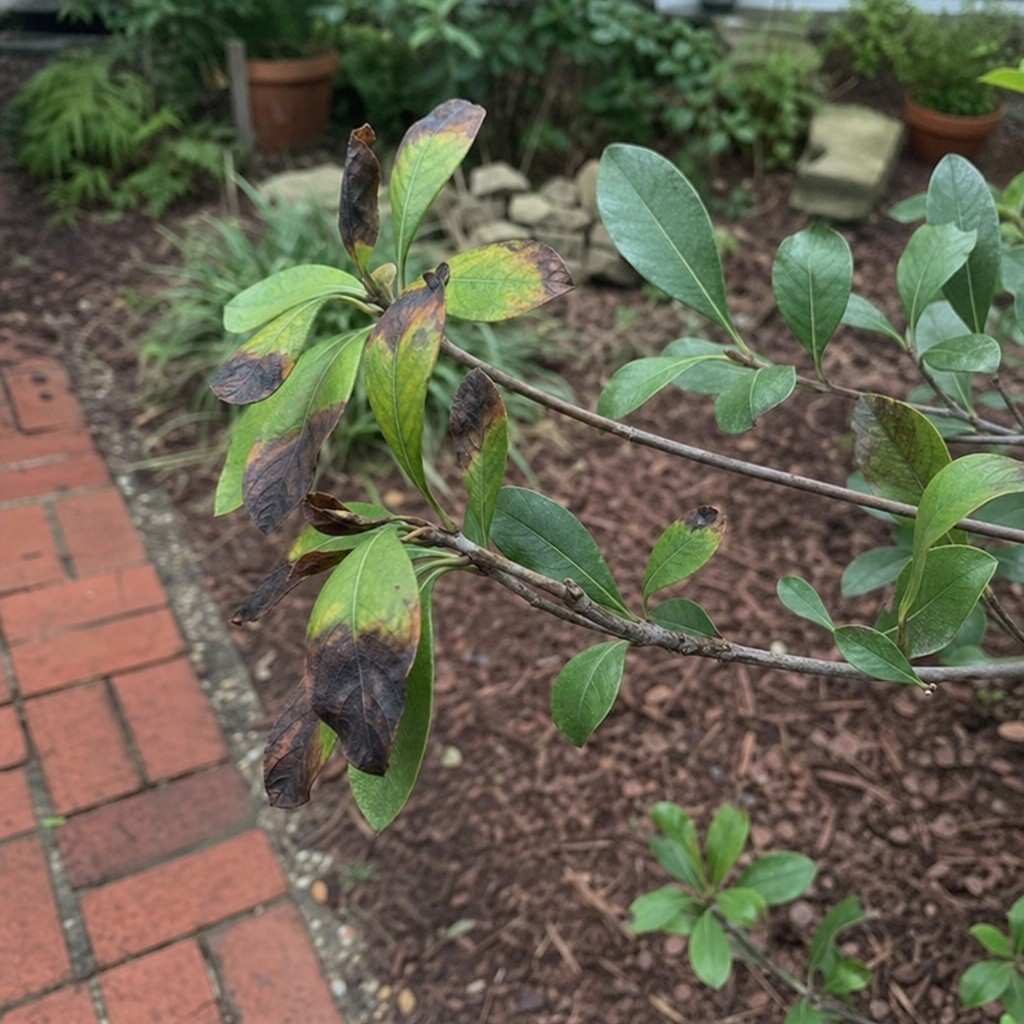
Cold combined with wind pulls water out of leaves faster than the roots can replace it. The tell is scorched, burnt-looking edges and tips.
The type of freeze matters too. A calm, clear night lets heat radiate straight off every leaf into open sky. That is the kind of freeze a cover protects against best.
A fast-moving cold air mass sweeping down from the north is a different problem.
Reading the damage afterward
Resist the urge to judge anything the next morning.
Cold damage often does not show for several days, sometimes weeks, and an early verdict is usually wrong.
Obvious leaf damage looks like black or burnt foliage, usually worst at the branch tips.
For anything less obvious, Georgia’s Extension service outlines two checks once enough time has passed.
- Cut a cross section through the top of a bud. Discoloration inside means that bud is damaged.
- Peel back a bit of bark to the cambium layer just underneath. Black or brown there means that section is injured.
Damage is often localized, so check more than one spot before writing off a whole plant.
Patience before pruning
Hold off on pruning until the freezes for the season have actually passed, not just the one you were watching this week.
Cutting too early risks removing wood that was never dead, based on a guess made while the plant still looked rough.
If a cut turns out to be needed, Georgia’s Extension service recommends going a few inches below the visibly injured tissue. Wait until you can see where the live wood actually starts.
Injured flower buds are a separate case.
They may reduce or skip a season of spring blooms, but they generally do not need to be cut at all.
The plant that looks worst the morning after a frost is rarely the plant you will be looking at in a few weeks. Give it time to show you what actually happened before deciding what, if anything, to cut.