
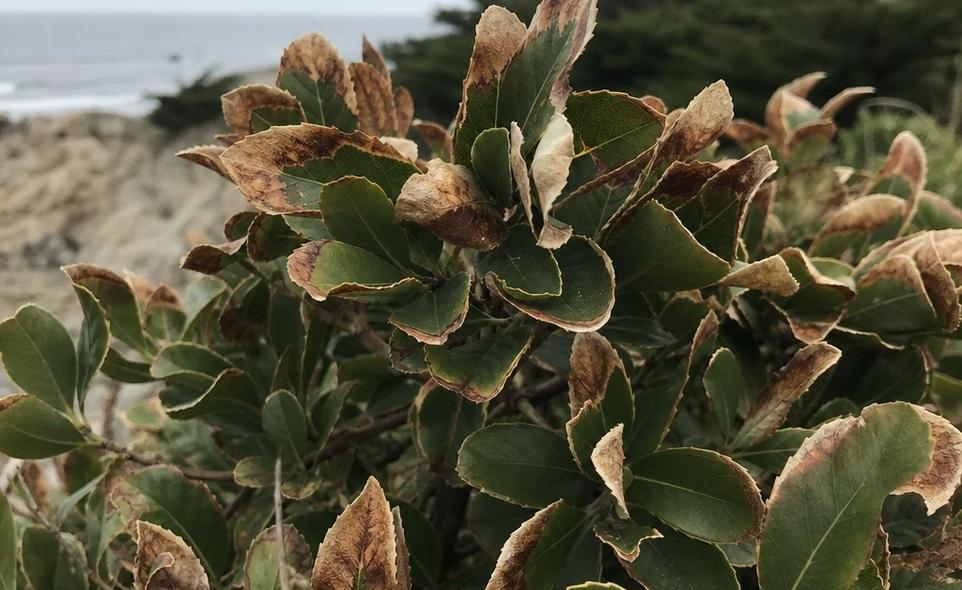
The leaf edges go brown first.
Then the margin curls and crisps further inward, while the center of the leaf often still looks fine.
If you garden anywhere near salt water, you have probably seen this on more than one plant.
It is not something you did wrong. It is salt.
Salt-spray damage is common for anyone gardening within a couple of miles of salt water, according to Florida’s Extension service. The combination of salty soil and sea spray decides which plants thrive there and which struggle.
Some plants tolerate that well. Others never fully recover, no matter how carefully you water or feed them.
The fix is not more attention. It is choosing plants built for the conditions you actually have.
How close to the water actually matters
Distance from the coast changes everything about which plants will work.
Plants installed within about one-eighth of a mile of a saltwater coast should be at least somewhat salt tolerant, according to Florida’s Extension service.
That is roughly 660 feet, closer than it sounds once you picture an actual property line.
More than three-quarters of Florida’s population lives in coastal counties, the same Extension service notes. Wind, salt, and sandy, high-pH soils all shape what grows well there.
Wind matters here too, not just spray. A gusty coastal site pulls moisture from leaves faster than a sheltered inland one.
That is part of why building a genuinely low-maintenance garden starts with matching plants to the site, rather than fighting it.
The closer you are to open water, the shorter your safe list gets. That is normal, and it is not a reason to give up on a coastal border.
What copes at ground level
Groundcovers and flowering plants handle salt differently, and a few stand out.
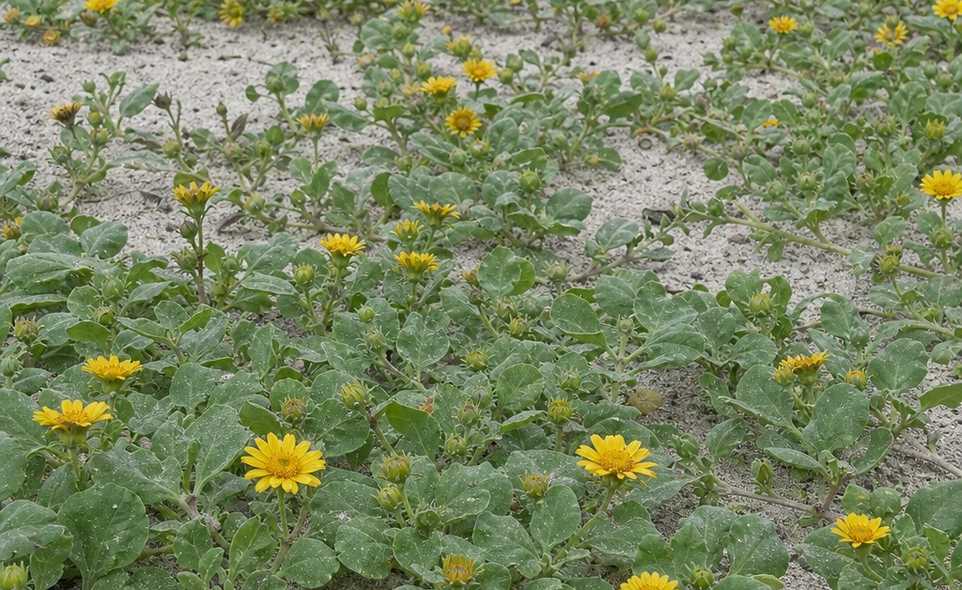
- Beach sunflower, gaillardia, and seaside goldenrod are wind and salt tolerant
- Railroad vine and gopher apple spread quickly and make good groundcovers or dune stabilizers
- Calendula and petunia are salt-tolerant annuals worth trying for seasonal color
Railroad vine in particular has a high tolerance for salty air and sandy soils. It is often the plant holding a dune together when little else will grow there.
None of these need pampering once established, the same forgiving logic behind choosing easy plants for first-time gardeners in the first place.
Grasses that shrug off wind and salt
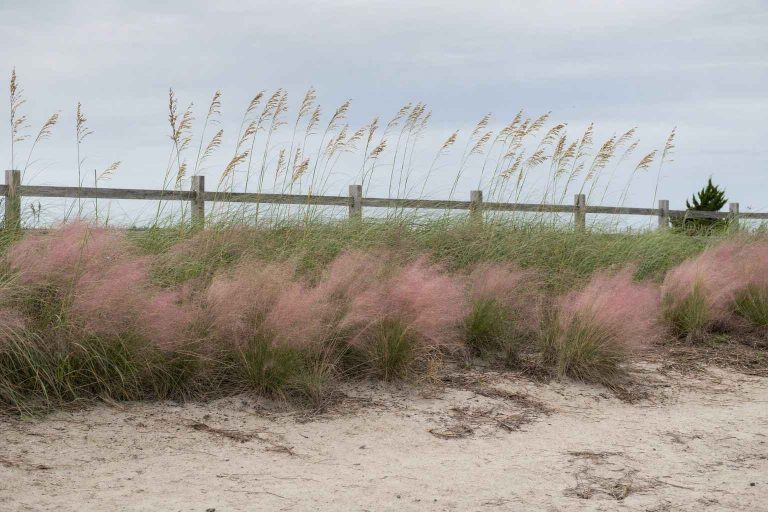
Ornamental grasses are some of the steadiest performers this close to the coast.
- Saltmeadow cordgrass
- Muhly grass
- Fakahatchee grass
- Sea oats
All four are at least moderately salt tolerant, and they move with the wind instead of fighting it.
Bougainvillea is worth a mention too, though it is only moderately salt tolerant. It does better set back from the immediate coastline, not planted right at the edge.
Shrubs and trees safe close to the coast
For structure and height, a handful of woody plants do well near salt water.
Live oak, southern red cedar, and mangrove are described as safe choices for coastal planting.
Palms are all at least moderately salt tolerant. Native cabbage palm and saw palmetto carry the highest tolerance, and Washington palm is also very salt tolerant.
Southern magnolia is moderately salt tolerant, but it should not be planted directly on the coastline.
For flowering shrubs, a short list holds up well in salt air:
- Hibiscus
- Firebush
- Plumeria
- Sterile lantana varieties
A mix of one or two trees, a flowering shrub, and a grass or groundcover underneath does more for a coastal border than looks alone. A dozen unrelated plants chosen for their looks rarely holds up the same way.
A wind screen and steady watering matter just as much
Picking salt-tolerant species is the most important step, but two other things carry real weight too.
Wind screens made from fences, sturdy shrubs, or a group of trees protect the plants behind them from the worst of the wind. That cuts down how much salt spray reaches their leaves.
New plants also need water until they are established, and as needed after that. Salt tolerant does not mean drought-proof from day one.
It is worth protecting native plants already growing on the property, too. Many coastal natives are naturally adapted to salt and wind, already proven to handle the site.
Your own coast decides the final list
Both of these lists come from Florida’s Extension service, and that matters more than it might seem.
Several of the plants named here, including sea oats, muhly grass, cabbage palm, and railroad vine, are Florida natives. They will not necessarily suit a coast in Maine, the Pacific Northwest, or the Gulf side of Texas.
Salt-tolerant plants vary in how much salt they can actually handle. They need to be chosen and placed carefully for the specific coast they are going into.
The most reliable next step is a local one. Every American state university runs a Cooperative Extension service, giving free local growing advice. Your own county or state office can tell you which salt-tolerant plants are proven to perform where you actually garden.
That single call or visit does more for a coastal border than any general list, this one included. It pairs well with the same restraint behind choosing calming plants for a low-stress garden.
What the border looks like once it is right
Give it a season or two, and the difference shows.
The leaf edges stop scorching. The grasses hold their shape through a windy week instead of shredding. The shrubs fill in low and dense instead of dying back on the side that faces the water.
You stop fighting the site and start working with it.
A border finally matched to its coast asks for less every season, not more.
That is the whole shift. From a border that is constantly recovering, to one that is simply, quietly, growing.